On this page
Executive Summary
Aging in place in the Hudson Valley carries region-specific challenges beyond generic home-safety advice: multi-level homes with stairs as the only path between floors, long or steep driveways that isolate a home in bad weather, and suburban or rural geography that makes driving cessation especially isolating. A realistic aging-in-place plan combines an honest home-safety assessment, targeted modifications rather than a full renovation, and a support plan for the transportation and supervision gaps that geography creates here specifically.
Why “Aging in Place” Means Something Different in the Hudson Valley
Most national aging-in-place advice is written with a generic single-level ranch home and a nearby grocery store in mind. That's not the housing stock or the geography most Hudson Valley families are actually working with. Whether the family home is in Bedford, Rhinebeck, Garrison, Cold Spring, Millbrook, Pound Ridge, Piermont, Amenia, or Warwick, the same three regional realities tend to shape what aging in place actually requires here: multi-level homes, meaningful distances between houses and services, and a level of car- dependence that makes losing the ability to drive a much bigger deal than it would be in a denser, more walkable place.
The Stairs Problem
Multi-level homes as the regional norm
Split-levels, colonials, and farmhouses with bedrooms upstairs and the only full bathroom on a different floor than the kitchen are simply the norm across much of the region's older housing stock, a genuinely different starting point than the single-story ranch homes common in other parts of the country where most aging-in-place guidance originates.
Realistic modification options
A full accessible renovation isn't realistic or necessary for most families. More targeted options include a stairlift (a substantial investment, but often less disruptive and less expensive than a full-scale addition), converting a downstairs den or dining room into a temporary bedroom, installing a portable or plumbed half-bath on the main floor if one doesn't already exist, and adding secure handrails on both sides of any staircase that remains in regular use.
The Driveway and Isolation Problem
Long and steep driveways
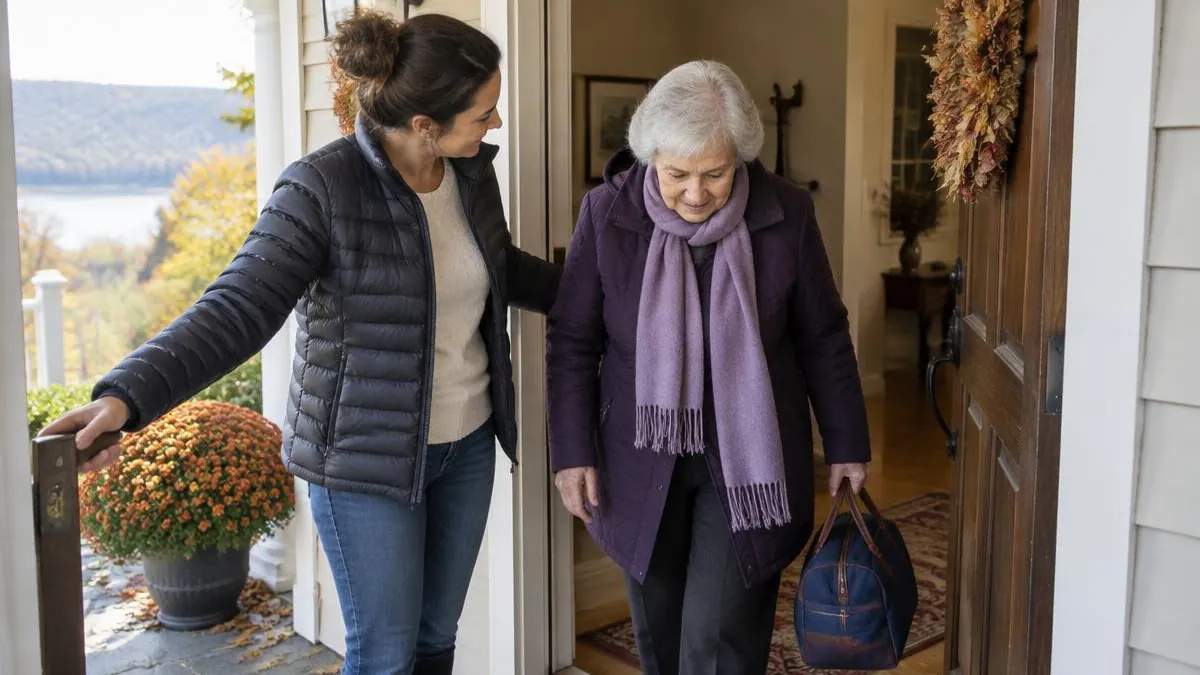
A driveway that feels like a minor inconvenience for an able-bodied homeowner can become a genuine barrier, to visitors, to emergency vehicles, to the person themselves, once mobility declines, particularly when it's also long enough that a fall or a stumble happens out of easy sight or earshot of the house.
Winter access
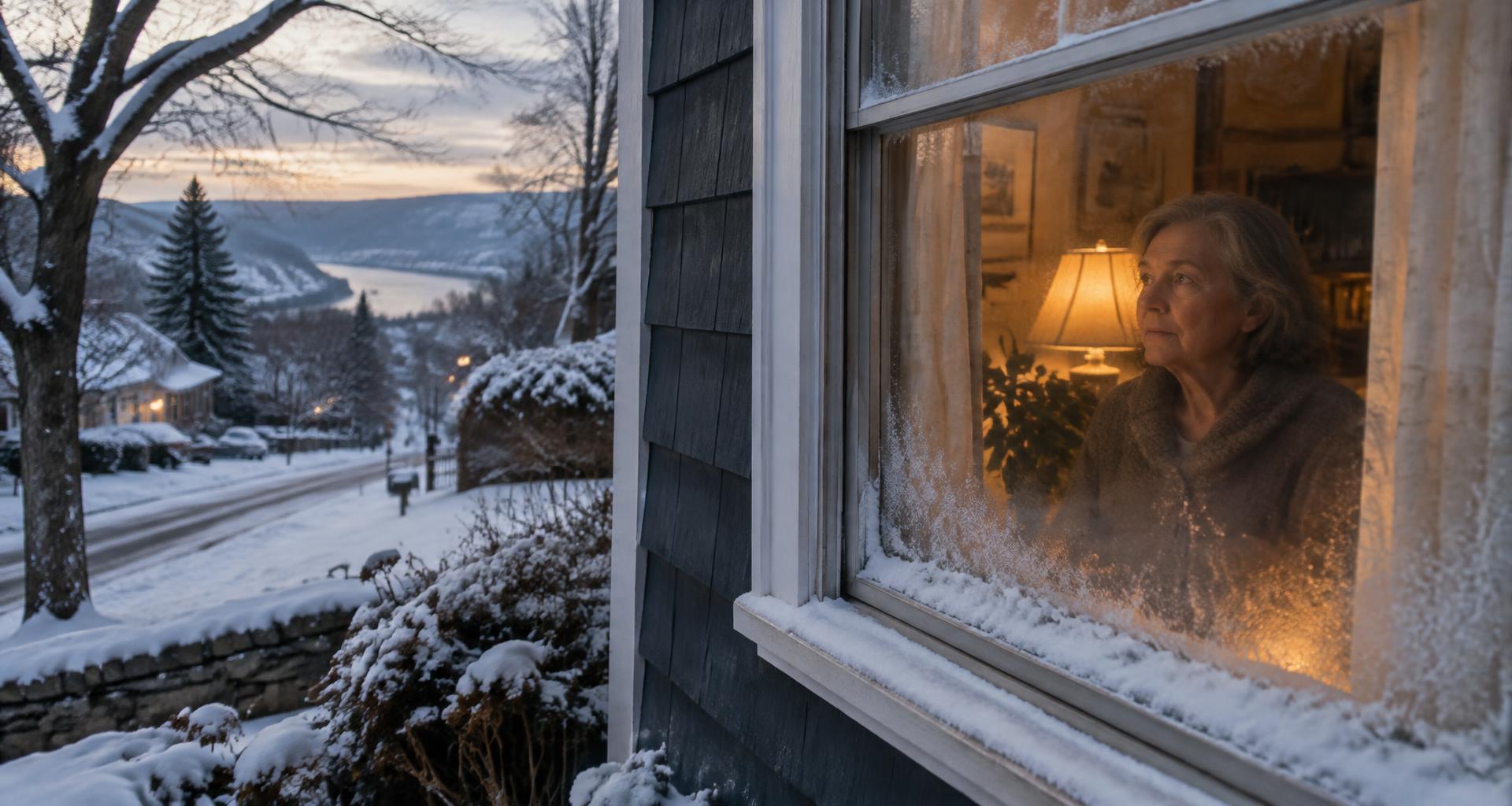
The driveway problem compounds directly with New York winters; our companion piece on the Hudson Valley winter care gap covers how this specifically affects scheduled caregiver visits, which is one concrete, practical version of a broader seasonal isolation risk.
Distance from services and family
Many Hudson Valley communities are meaningfully farther from a hospital, a pharmacy, or an adult child's home than families initially account for when thinking through what “staying in the house” will actually require day to day.
The Transportation Problem
Driving cessation in a car-dependent region
Losing the ability to drive safely is a hard transition anywhere, but it's a particularly isolating one in a region built around cars, where the nearest grocery store, pharmacy, or social activity may be a ten- or fifteen-minute drive rather than a walk down the block. This transition deserves planning well before it becomes an emergency decision made after a near-miss or a difficult conversation with a physician.
Regional transportation resources
County Offices for the Aging typically coordinate or can point families toward senior transportation services, medical-appointment transportation, and volunteer driver programs; these resources vary by county and are worth investigating well ahead of when they're actually needed (see the resource list below).
A Practical Home Safety Assessment Checklist
A realistic walk-through should cover: is there a safe, step-free path from the most-used entrance to the main living areas? Are stairs equipped with secure handrails on both sides? Is there adequate lighting along every regularly used path, especially at night? Are bathroom fixtures (grab bars, a shower seat, a raised toilet seat) adequate for current and reasonably anticipated mobility? Is the driveway and walkway surface even, well-lit, and manageable in ice and snow? Could emergency responders reasonably locate and access the home if needed?
When Modification Is Enough, and When It Isn't
Modification alone tends to be enough when the primary barriers are physical and structural, stairs, lighting, bathroom safety, and the person's cognitive status and overall health remain stable. Modification alone tends to fall short when supervision needs (due to cognitive changes, fall risk, or medical complexity) exceed what the physical environment can solve on its own, no amount of grab bars addresses a person who needs someone present overnight, or who can no longer safely manage medications independently.
Decision Framework: Aging in Place vs. Additional Support vs. Relocation
A reasonable way to think through this: start with what the physical environment can be modified to support safely. Then assess what supervision, medical, or social needs remain even after reasonable modification, this is usually where in-home support enters the picture, filling the gap between “the house could work” and “the house works safely for this specific person's actual needs.” Only when the combination of home modification and in- home support genuinely can't meet safety needs, or when the financial or logistical reality of maintaining the home becomes unsustainable, does relocation typically become the more realistic answer. This is rarely an all-or-nothing decision made once; it's usually a series of smaller adjustments over time.
New York and Hudson Valley Resources Worth Knowing
The Dutchess County Office for the Aging and the Westchester County Department of Senior Programs & Services both offer information and assistance for home safety, transportation, and long-term care navigation; NY Connects serves as New York State's broader entry point for long-term services and support information, regardless of ability to pay. Families outside these two counties should look for the equivalent Office for the Aging serving their own county as a starting point.
What This Means for Families
Angels on Call Homecare has spent more than two decades inside Hudson Valley homes, enough time to see firsthand which modifications genuinely extend independence and which ones simply delay a harder conversation. When a home assessment surfaces gaps that modification alone can't close, supervision at specific times of day, help with transportation, or overnight safety, in-home support can bridge that gap without requiring a move.
Frequently Misunderstood Issues
Families sometimes assume a stairlift or grab bars alone “solves” aging in place, physical modifications address physical barriers, but they don't address supervision, cognitive support, or medical complexity, which are just as often the real limiting factor. It's also commonly assumed that losing the ability to drive is primarily a transportation problem; in practice, it's often more of an isolation and mental-health problem, since driving represents independence and access to social connection as much as it represents literal transportation.
This article is educational and does not replace medical advice. Always consult the treating physician or care team about symptoms, medications, and changes in condition.