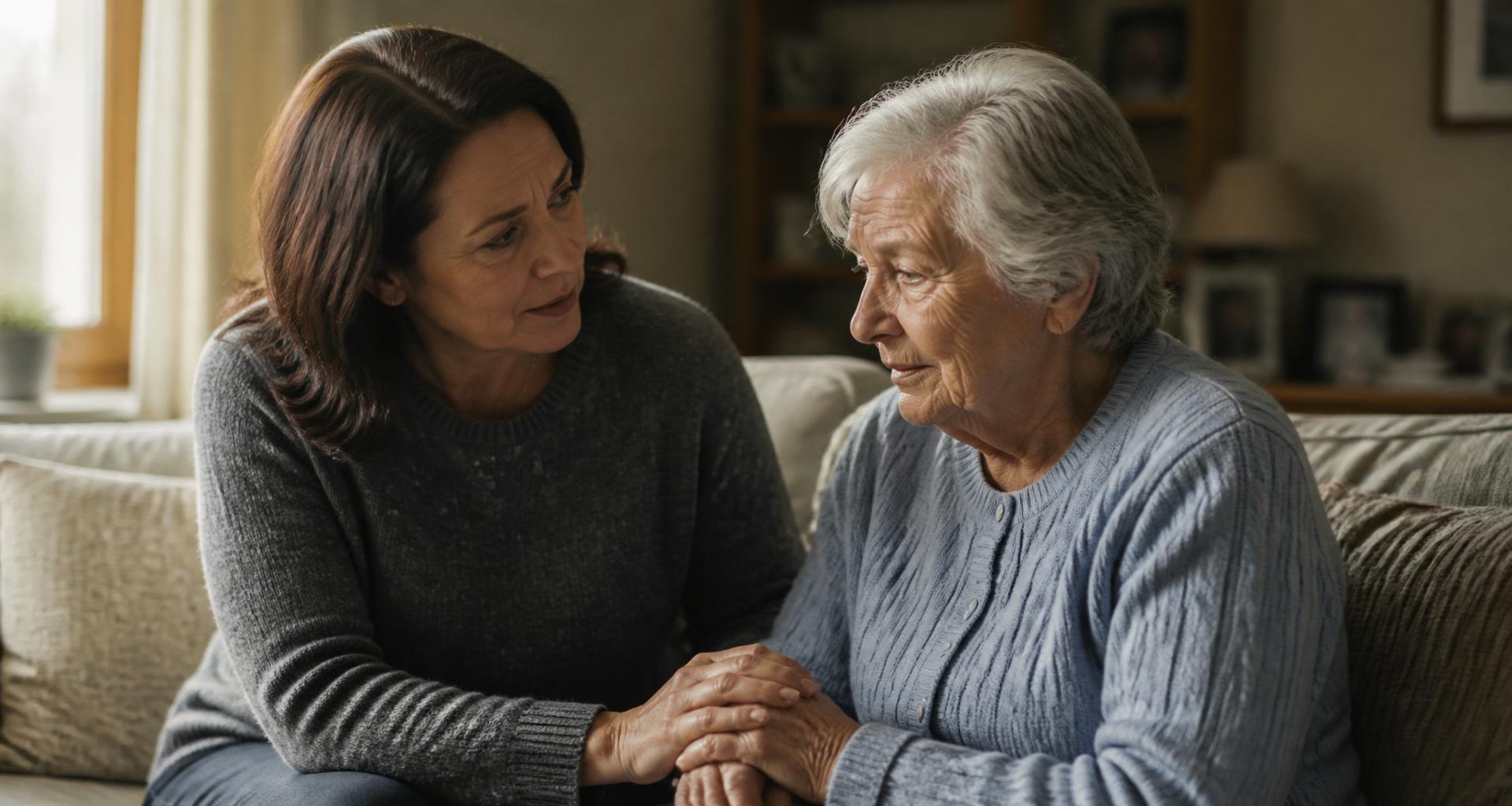
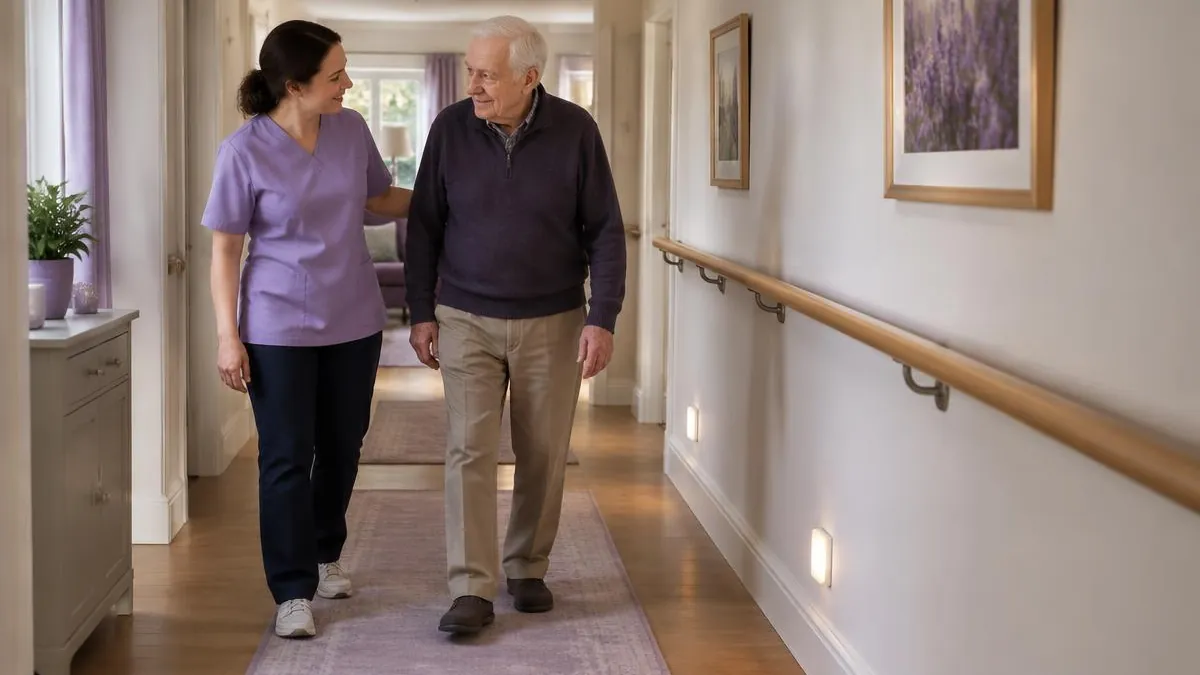
Most families don't wake up one morning realizing they need specialized homecare. The shift happens quietly, over weeks or months, in a series of moments that seem manageable in isolation but, taken together, tell a very different story. The hardest part of advanced Dementia and Parkinson's care at home is often not the caregiving itself, it is recognizing when the model that worked six months ago no longer fits.
Here are seven signals that a family has crossed that line, and that basic, task-based homecare is no longer enough.
1. Behavior Is Being Managed Instead of Understood
Task-based care responds to behavior. Specialized care asks what the behavior is communicating. If your loved one's agitation, resistance, or emotional distress is being met with redirection, distraction, or "we'll wait it out", but the pattern is repeating and intensifying, that is a signal that behavior is being managed rather than decoded. In Dementia particularly, unresolved behavioral expression is almost always an unmet need in disguise: pain, environmental overwhelm, fear, or exhaustion the person can no longer easily name.
2. The Same Small Issues Keep Recurring
Nights are getting harder. Bathing is becoming a battle. A specific hour of the day has become predictably difficult. When issues recur despite everyone's best efforts, it usually means care is being delivered at the level of the task, not the level of the pattern. Specialized care is built around identifying and adjusting the underlying conditions that make the same problems repeat, routine, environment, timing, caregiver approach, rather than absorbing the same friction week after week.
3. Family Members Are Absorbing More Than They Realize
If a spouse, adult child, or other family member is quietly doing the emotional labor of "translating" the person to the caregivers, explaining moods, filling in history, warning about triggers, mediating conflict, the care model is under-supported. That translation is a clinical role. When it falls to a family member, they are functioning as the case manager without the training, the time, or the recovery periods that role requires. That leads to burnout, and burnout in a primary family caregiver often precipitates the next crisis.
4. Care Professionals Are Rotating More Than the Person Can Absorb
For a person with Dementia or Parkinson's, an unfamiliar Care Professional in the home is a cognitive and emotional event. If the schedule is filled by whoever is available rather than by a small, consistent team, families frequently notice increased confusion, sleep disruption, resistance to care, or behavioral escalation, even when the individual caregivers are all competent. That is not a coincidence. Continuity is a clinical strategy, and when it is compromised, the person receiving care pays the price first.
5. Medical Changes Are Being Handled Reactively
The last three notable changes, a fall, a new medication, a hospital visit, a shift in mobility, were reacted to after the fact rather than anticipated. Nobody in the current care arrangement is holding the trajectory. In progressive conditions, this pattern is a signal that clinical oversight is either missing or too intermittent, and it is one of the strongest predictors of a preventable hospitalization in the next 6–12 months.
6. Home Safety Has Quietly Become a Daily Calculation
If someone in the family has started constantly assessing whether it's safe for your loved one to be alone for an hour, to use the stairs, to be in the kitchen, to be up overnight, that constant, low-grade vigilance is a signal. It usually means the care model in place doesn't fully cover the hours and situations that are actually risky, and the family is silently making up the difference.
7. The Person Is Still Physically Present, But Less Recognizably Themselves
This is the quietest signal, and the most important. Dementia and Parkinson's both carry the risk that care becomes so focused on safety and tasks that identity, the person's humor, preferences, routines, purpose, connection, quietly recedes. If your loved one is safe but visibly less engaged, less themselves, less connected to the things that used to define them, the care model in place may be preserving their body while unintentionally letting their identity slip. Identity-centered, specialized care is specifically designed to prevent this.
What "More Than Basic Homecare" Actually Means
More than basic homecare does not necessarily mean more hours, more caregivers, or more equipment. It usually means a different kind of care structure: proactive RN Case Manager oversight, Care Professionals trained specifically in Dementia and Parkinson's behavior and mobility, deliberate continuity of the same team, and an approach that treats behavior as communication and identity as clinically significant. For some families, that shift is layered on top of the existing care arrangement. For others, it means moving toward a live-in continuity model. Either way, the decision is easier, and the outcomes are better, when it happens before a crisis forces the hand.
Key Takeaways
- Recurring behaviors, rotating caregivers, and reactive medical decisions are early signals that basic homecare is no longer enough.
- Family members quietly absorbing the "translator" role are a strong indicator of an under-supported care model.
- Safety vigilance and identity loss often coexist and are both symptoms of care that is not built for the current stage of the condition.
- Moving to specialized care earlier, before a crisis, produces significantly better outcomes than reacting after one.
External Authority References