

Skip to content

    Powered by

    Angels on Call Homecare

    Call
    Back to Blog & Insights
    Dementia Care

    Apathy or Depression? One of the Most Misunderstood Changes in Dementia

    Apathy and depression look similar in Dementia but are different conditions with different causes, how to tell them apart and what each means for care.

    Eric J. Dalton, Vice President, Angels on Call Homecare

    Eric J. Dalton

    Vice President, Angels on Call Homecare

    •Aug 9, 2026• 3 min
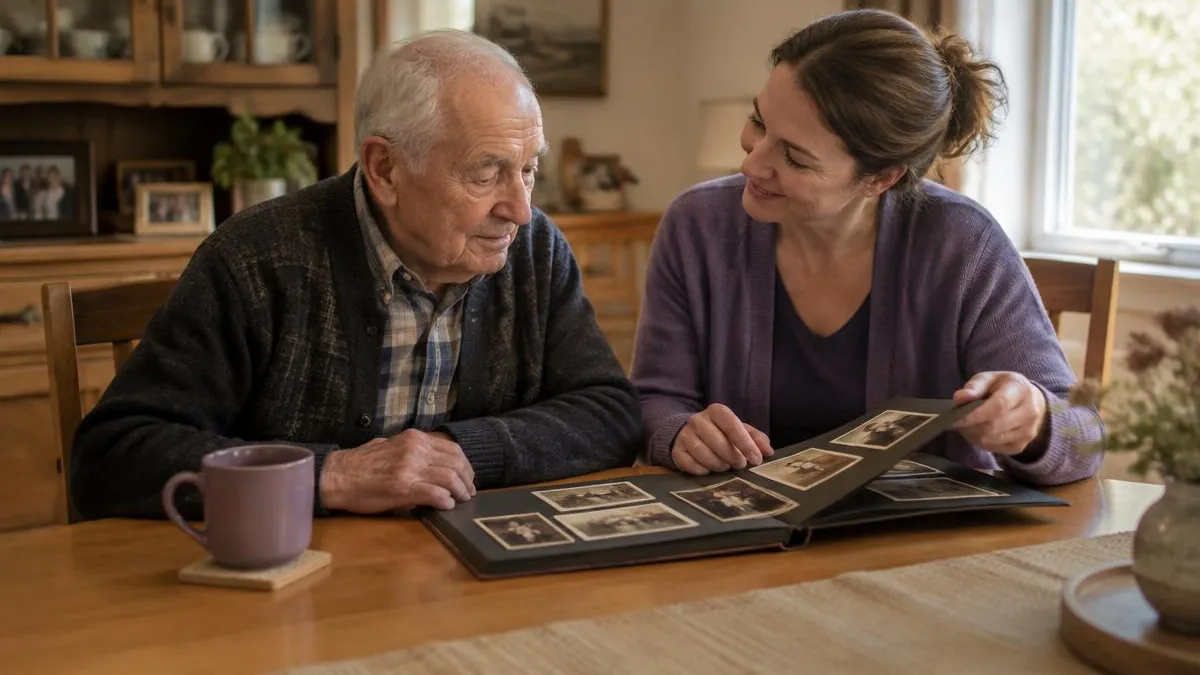
    Caregiver opening a family photo album to gently engage a quiet older man at the dining table, apathy and depression in Dementia

    Apathy and depression can look alike in Dementia, both involve reduced activity and interest, but they differ in an important way: depression involves sadness, guilt, and emotional pain, while apathy involves a flattened emotional response without that same distress. Apathy is one of the most common behavioral changes in Dementia and tends to increase as the disease progresses, while depression symptoms are often more stable over time. The distinction matters because treatment differs.

    Why These Two Get Confused

    Both conditions can show up as the same visible behavior: a person who used to enjoy hobbies, conversation, or outings suddenly sits for long stretches doing nothing, shows little interest in activities they once loved, and needs prompting to do almost anything. From the outside, apathy and depression can look nearly identical. What differs is what's happening underneath.

    How Apathy Presents

    Apathy is a loss of motivation and initiative rather than a loss of mood. A person with apathy may sit for long periods without appearing distressed by it, rely on others to suggest activities, show flat or minimal emotional response to news, good or bad, and simply have no internal drive to start routine tasks. Importantly, the person is typically not troubled by this state the way someone with depression would be; they aren't unhappy about doing nothing, they're just not moved to do anything else.

    How Depression Presents

    Depression carries genuine emotional pain: sadness, hopelessness, guilt, or a sense of worthlessness. A depressed person is often uncomfortable in their withdrawal and may actively avoid social situations rather than simply not initiate them. Sleep and appetite changes are also more characteristic of depression than of apathy alone.

    Side-by-Side: Apathy vs. Depression

    FeatureApathyDepression
    Emotional toneFlat, indifferentSad, guilty, hopeless
    Distress about the stateMinimal or absentPresent, often significant
    TrajectoryTends to increase with Dementia severityCan appear at any stage, often more stable over time
    Typical response to antidepressantsLimitedOften responsive

    This is a general clinical pattern, not a checklist for a family to diagnose from, both conditions can also occur together, and a doctor's evaluation is the only reliable way to sort out which is driving a specific person's withdrawal.

    Why the Difference Matters for Treatment

    Depression in Dementia often responds to standard treatments, including antidepressant medication and counseling approaches adapted for cognitive impairment. Apathy generally does not respond well to antidepressants on its own, since it isn't fundamentally a mood disorder, the more effective approaches tend to be structural and environmental: engagement, routine, and activities tailored to a person's remaining strengths and interests.

    What Families Can Do Either Way

    Regardless of which condition is at play, gentle, low-pressure engagement helps: offering (not demanding) a specific activity rather than an open-ended “do you want to do something,” building small moments of connection into the day, and not mistaking withdrawal for a lack of care about the relationship. A person with apathy specifically isn't choosing distance, the drive to initiate connection has genuinely diminished, even when the underlying capacity for connection is still there when someone else starts it.

    When to Seek a Formal Evaluation

    A marked, sustained change in interest, mood, or motivation is worth bringing to a doctor, both because depression is treatable and because distinguishing it from apathy affects what treatment actually makes sense. This distinction can only be reliably made by a clinician; this article is educational and cannot diagnose either condition.

    What This Means for Care at Home

    Engagement-focused Dementia care, built around a person's history, interests, and remaining strengths, can meaningfully soften the isolating effect of apathy, even when it can't reverse it. A companion Care Professional who knows what someone used to love doing can often coax a response that a well-meaning but unstructured “do you want to do something today?” cannot.

    This article is educational and does not replace medical advice. Always consult the treating physician or care team about symptoms, medications, and changes in condition.

    Sources

    • UCLA Health, “Depression and Apathy, Alzheimer's & Dementia Care”
    • National Institute on Aging, behavior-and-communication resources

    FAQ Schema Indexed

    Frequently asked questions

    Is apathy the same thing as laziness?+

    No. Apathy is a neuropsychiatric symptom tied to changes in the brain, not a choice or a character trait, it reflects a genuine loss of the internal drive that normally initiates activity.

    Can antidepressants help with Dementia-related apathy?+

    Generally not, since apathy isn't primarily a mood disorder the way depression is. Structural approaches, routine, engagement, and tailored activity, tend to be more effective for apathy specifically.

    Does apathy get worse as Dementia progresses?+

    Often, yes, apathy tends to become more pronounced with increasing Dementia severity, unlike depression, which can appear and fluctuate at various stages independent of overall cognitive decline.

    Can someone have both apathy and depression at the same time?+

    Yes, the two can coexist, which is part of why a clinical evaluation, rather than a family's best guess, is the right way to sort out what's actually happening and what treatment fits.

    Is apathy ever an early warning sign of Dementia, before memory problems start?+

    Some research suggests apathy can emerge early in the course of cognitive decline, in some cases before memory symptoms become prominent, which is one reason clinicians take a sustained change in motivation seriously as a symptom worth evaluating.

    #apathy#depression#dementia
    Share
    Eric J. Dalton, Vice President, Angels on Call Homecare

    About the Author

    Eric J. Dalton

    Vice President, Angels on Call Homecare

    CDES · CDCP · Dementia Care Specialist · Montessori Dementia Capable Certification · Teepa Snow Inspired Certification · CPDC · Parkinson's Foundation Site Champion · Aging in Place Essentials Professional

    Dementia and Parkinson's care strategist, systems thinker, and advocate for dignity-centered aging at home. Through Aging in Place Redefined and leadership at Angels on Call Homecare, his work focuses on redefining advanced, emotionally intelligent, clinically guided care at home for families navigating cognitive and neurological conditions.

    Written and reviewed by Eric J. Dalton. Last reviewed Aug 9, 2026. See full credentials

    Specialized Care at Home

    Looking for specialized Dementia or Parkinson's care at home?

    Angels on Call Homecare delivers clinically supervised, specialized in-home care designed around the person, not the schedule of a facility.