
Skip to content

    Powered by

    Angels on Call Homecare

    Call
    Back to Blog & Insights
    Parkinson's Care

    Orthostatic Hypotension in Parkinson's: When Standing Up Causes Dizziness, Weakness or Falls

    Orthostatic hypotension is a common, under-discussed Parkinson's symptom that raises fall risk, its causes, warning signs, and practical safety steps.

    Eric J. Dalton, Vice President, Angels on Call Homecare

    Eric J. Dalton

    Vice President, Angels on Call Homecare

    •Aug 20, 2026• 3 min
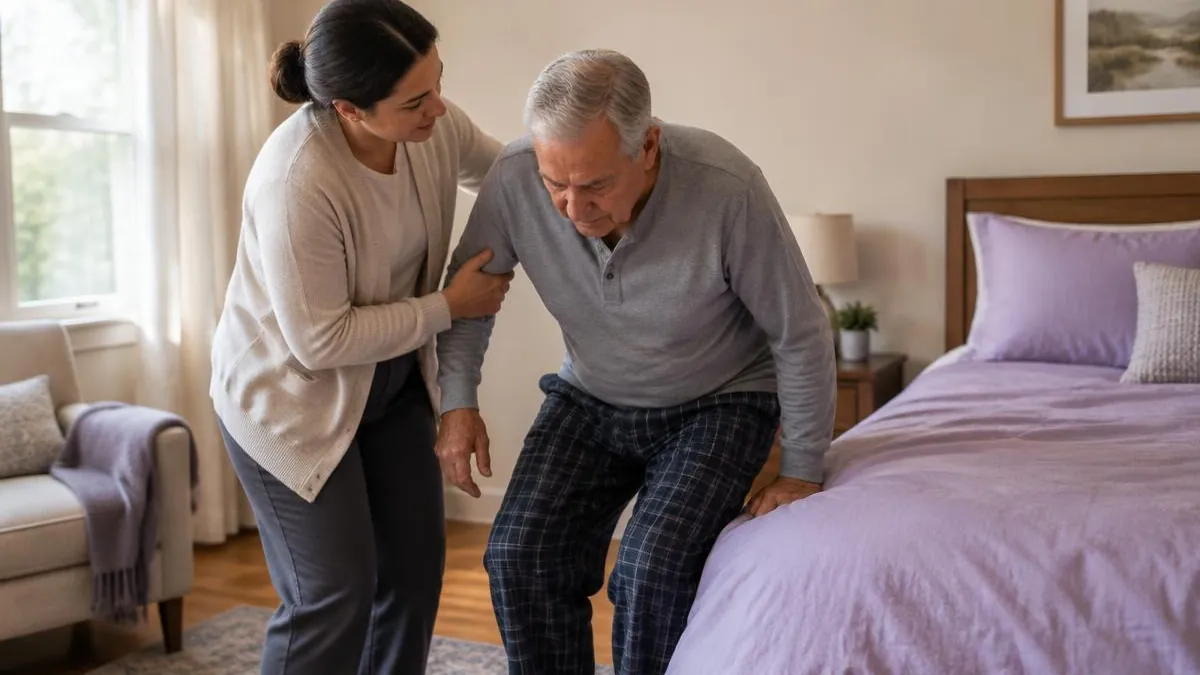
    Caregiver steadying an older man as he slowly rises from the edge of his bed, orthostatic hypotension in Parkinson's

    Orthostatic hypotension (OH) is a drop in blood pressure when moving from sitting or lying to standing, common in Parkinson's disease because the condition affects the autonomic nervous system that normally keeps blood pressure stable during position changes. When linked to a neurologic cause like Parkinson's, it's called neurogenic orthostatic hypotension (nOH). Symptoms include lightheadedness, blurred vision, and fainting risk, a significant contributor to falls. Rising slowly and staying hydrated help.

    What Orthostatic Hypotension Is

    Every time a person stands up, blood naturally tends to pool in the legs, and the nervous system normally compensates instantly by tightening blood vessels to keep blood pressure stable. In Parkinson's disease, this compensating mechanism can fail, causing blood pressure to drop noticeably upon standing.

    Why Parkinson's Causes It

    Parkinson's disease affects the autonomic nervous system, which the Parkinson's Foundation notes is responsible for automatic body functions including blood pressure regulation. People with Parkinson's often have reduced levels of norepinephrine, the chemical messenger that normally tightens blood vessels to raise blood pressure on standing, which helps explain why this symptom is so common in the disease.

    Warning Signs Families Should Watch For

    Lightheadedness or dizziness specifically upon standing (rather than at rest), blurred vision, sudden weakness, and fainting are the hallmark symptoms, and their close link to a specific trigger (the act of standing) is the key clue that separates OH from other causes of dizziness.

    Why It's a Serious Fall Risk

    Because OH-related dizziness strikes precisely at the moment a person is changing position, often while reaching for balance, grabbing furniture, or already in motion, it's a well- established contributor to falls in Parkinson's disease specifically.

    What Helps

    Position changes and pacing

    Rising slowly in stages, from lying to sitting, pausing, then sitting to standing, gives the circulatory system more time to compensate than standing up abruptly.

    Hydration and diet

    Adequate fluid intake supports blood volume and blood pressure; a physician or dietitian can advise on any dietary adjustments appropriate for a specific person.

    Medication review with the care team

    Some Parkinson's medications, along with certain blood pressure medications, can worsen orthostatic hypotension, a comprehensive medication review with the treating physician is often part of managing this symptom effectively.

    When to Call the Doctor

    Fainting, a fall, or dizziness severe enough to prevent standing safely should be reported to the treating physician promptly, orthostatic hypotension is often manageable once identified, but it can also signal that a medication needs adjustment.

    What Professional Homecare Can Add

    Angels on Call Homecare's Parkinson's-trained Care Professionals are taught to recognize the specific pattern of position-triggered dizziness that signals orthostatic hypotension, rather than assuming every dizzy spell is the same. For families managing frequent dizzy spells, having a Care Professional present during morning routines, when OH episodes are often most pronounced, after a full night lying flat, can add a real margin of safety.

    This article is educational and does not replace medical advice. Always consult the treating physician or care team about symptoms, medications, and changes in condition.

    Sources

    • Parkinson's Foundation, “Vertigo, Dizziness & Low Blood Pressure”
    • Parkinson's Foundation, “Low Blood Pressure and PD”

    FAQ Schema Indexed

    Frequently asked questions

    What's the difference between orthostatic hypotension and regular low blood pressure?+

    Orthostatic hypotension is specifically tied to a change in position, it's the drop that happens upon standing, not a generally low blood pressure at rest.

    Can Parkinson's medications cause or worsen orthostatic hypotension?+

    Yes, some Parkinson's medications, including certain dopamine agonists, can contribute to or worsen OH, this is worth discussing with the prescribing physician if symptoms are new or worsening.

    How is orthostatic hypotension diagnosed?+

    A doctor typically measures blood pressure while lying down, then again shortly after standing, looking for a significant drop that defines the condition.

    What immediate steps help if someone feels dizzy after standing?+

    Sit or lie back down right away, and avoid standing again until the dizziness has fully resolved.

    Are compression stockings helpful for orthostatic hypotension?+

    They can be, by helping reduce blood pooling in the legs, this is a strategy to discuss with a physician as part of a broader management plan.

    #orthostatic#hypotension#parkinsons
    Share
    Eric J. Dalton, Vice President, Angels on Call Homecare

    About the Author

    Eric J. Dalton

    Vice President, Angels on Call Homecare

    CDES · CDCP · Dementia Care Specialist · Montessori Dementia Capable Certification · Teepa Snow Inspired Certification · CPDC · Parkinson's Foundation Site Champion · Aging in Place Essentials Professional

    Dementia and Parkinson's care strategist, systems thinker, and advocate for dignity-centered aging at home. Through Aging in Place Redefined and leadership at Angels on Call Homecare, his work focuses on redefining advanced, emotionally intelligent, clinically guided care at home for families navigating cognitive and neurological conditions.

    Written and reviewed by Eric J. Dalton. Last reviewed Aug 20, 2026. See full credentials
    Specialized Care at Home

    Looking for specialized Dementia or Parkinson's care at home?

    Angels on Call Homecare delivers clinically supervised, specialized in-home care designed around the person, not the schedule of a facility.