When most people think about Parkinson's disease, they think about
tremors.
A shaking hand.
A visible movement disorder.
But for many families, the earliest symptoms of Parkinson's disease have
nothing to do with tremors at all.
The first signs are often subtle, gradual, and deeply misunderstood.
A loved one may:
-
Move slower
-
Speak more softly
-
Withdraw socially
-
Become unusually fatigued
-
Lose facial expression
-
Struggle with sleep
-
Experience anxiety or depression
-
Have trouble multitasking
-
Begin shuffling while walking
-
Appear emotionally "flat"
Families frequently dismiss these changes as:
-
Normal aging
-
Stress
-
Burnout
-
Personality changes
-
Depression alone
Meanwhile, Parkinson's disease may already be progressing neurologically
in the background.
At Aging in Place Redefined, Parkinson's disease is viewed not
simply as a movement disorder, but as a complex neurological condition
affecting mobility, cognition, communication, emotional regulation,
energy levels, sleep, autonomy, and identity itself.
Understanding the full picture matters.
Because earlier recognition often leads to earlier intervention, safer
outcomes, and better long-term quality of life at home.
Parkinson's Disease Is More Than Movement
Parkinson's disease impacts dopamine-producing pathways in the brain,
affecting far more than physical motion.
The condition may influence:
-
Mobility
-
Balance
-
Speech
-
Swallowing
-
Sleep
-
Mood
-
Executive functioning
-
Cognitive processing
-
Emotional expression
-
Autonomic functioning
This is why many individuals with Parkinson's disease feel misunderstood
early on.
They know something feels "off," even before others recognize visible
symptoms.
Early Parkinson's Symptoms Families Commonly Miss
1. Slower Movement and Reduced Automatic Motion
One of the earliest Parkinson's symptoms is often bradykinesia ,
slowed movement.
But this does not always appear dramatic initially.
Families may notice:
-
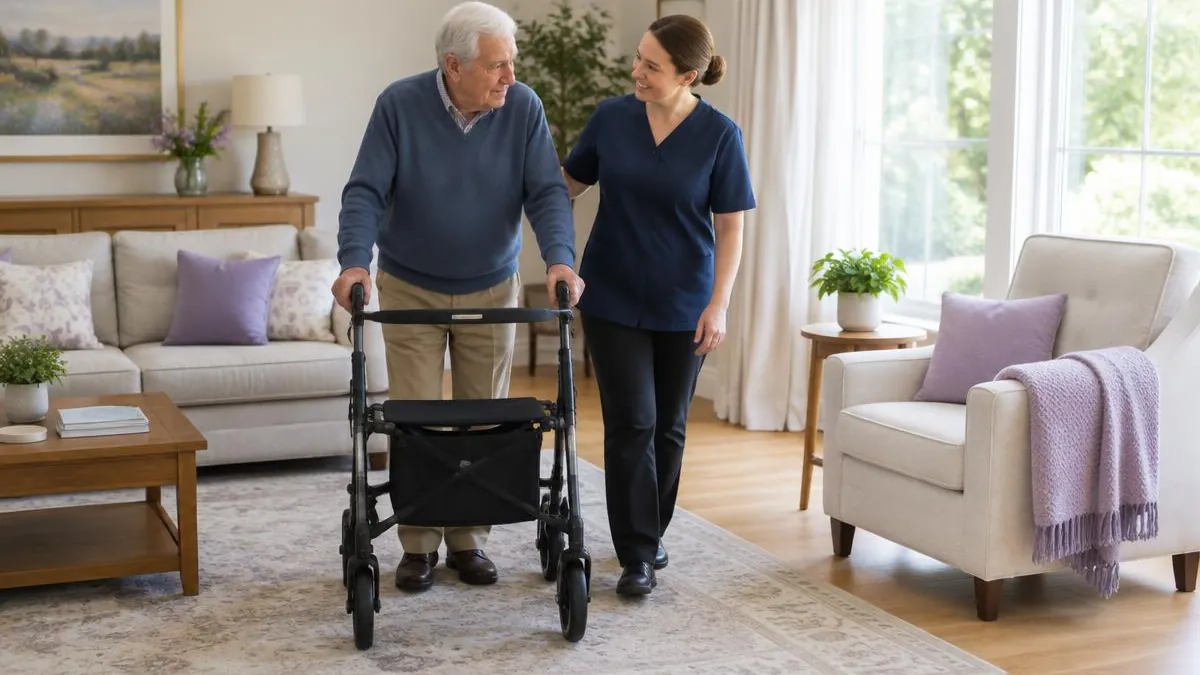
Walking more slowly
-
Smaller steps
-
Delayed reactions
-
Reduced arm swing
-
Difficulty standing from chairs
-
Slower dressing or grooming
-
Longer time completing tasks
These changes are often subtle enough that families attribute them to
aging.
But Parkinson's-related movement slowing is neurological, not simply
age-related fatigue.
2. Facial Expression Changes
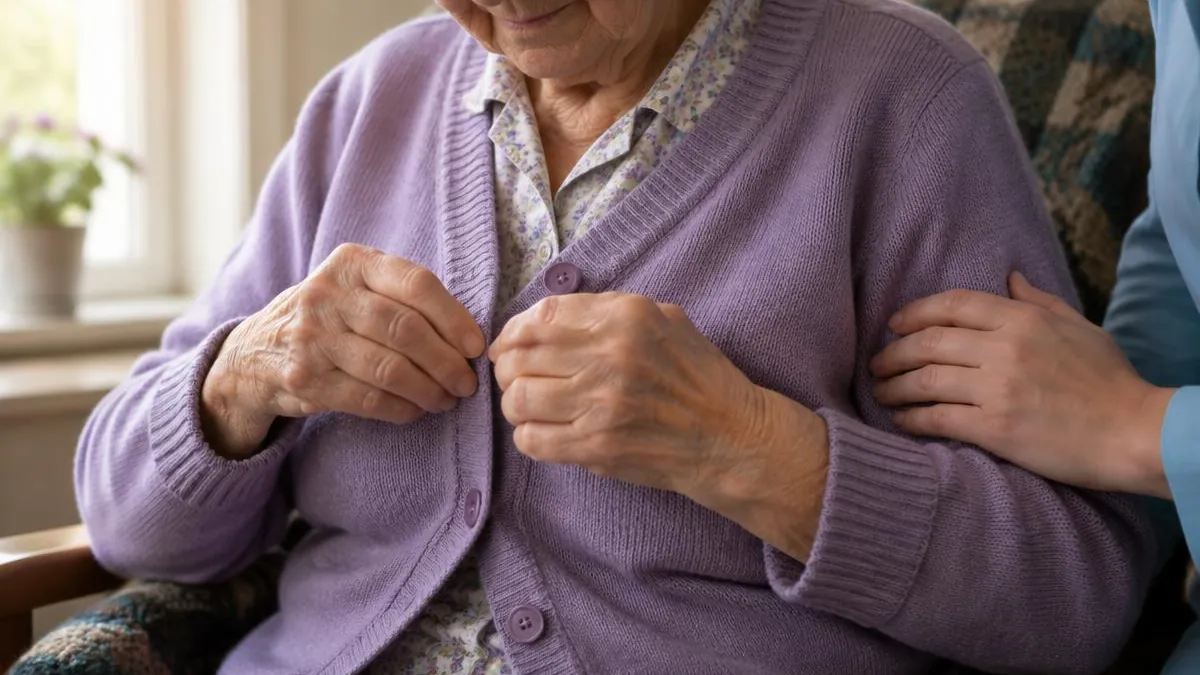
Many individuals with Parkinson's disease gradually develop reduced
facial expressiveness.
This is sometimes called "masked facies."
Families may notice:
Others may incorrectly assume:
-
The person is depressed
-
Emotionally disconnected
-
Angry
-
Uninterested
In reality, the neurological pathways controlling automatic facial
movement are changing.
The person often still feels emotion deeply, it simply becomes harder
to physically express.
3. Softening of the Voice
A quieter voice is another frequently overlooked symptom.
Speech may become:
-
Softer
-
More monotone
-
Less clear
-
Faster or rushed
-
Difficult to project
Families often say:
"They mumble now."
But the individual themselves may not realize how soft their voice has
become.
This communication change can significantly impact:
-
Confidence
-
Social interaction
-
Emotional connection
-
Relationship dynamics
Speech therapy and specialized Parkinson's support can often help
preserve communication abilities longer.
4. Fatigue That Feels Different From Ordinary Tiredness
Parkinson's fatigue is often profound.
This is not simply "feeling sleepy."
Many individuals describe:
Fatigue may appear long before significant mobility decline.
Families often underestimate how neurologically exhausting Parkinson's
disease can be.
5. Sleep Disruption
Sleep changes are extremely common in Parkinson's disease.
Symptoms may include:
Poor sleep then worsens:
-
Balance
-
Cognition
-
Mood
-
Fall risk
-
Emotional regulation
This creates a cycle where exhaustion intensifies overall symptom
burden.
6. Subtle Cognitive Changes
Parkinson's disease can impact executive functioning long before severe
cognitive decline develops.
Families may notice:
-
Slower processing speed
-
Difficulty multitasking
-
Trouble organizing tasks
-
Reduced focus
-
Increased overwhelm
-
Forgetfulness
-
Mental fatigue
These symptoms are often frustrating because individuals remain highly
aware of the changes occurring.
This awareness can contribute to anxiety, depression, and withdrawal.
7. Emotional and Psychological Changes
One of the most misunderstood aspects of Parkinson's disease involves
emotional health.
Many individuals experience:
Families sometimes focus so heavily on physical symptoms that emotional
suffering goes unnoticed.
But emotional wellbeing is inseparable from quality Parkinson's care at
home.
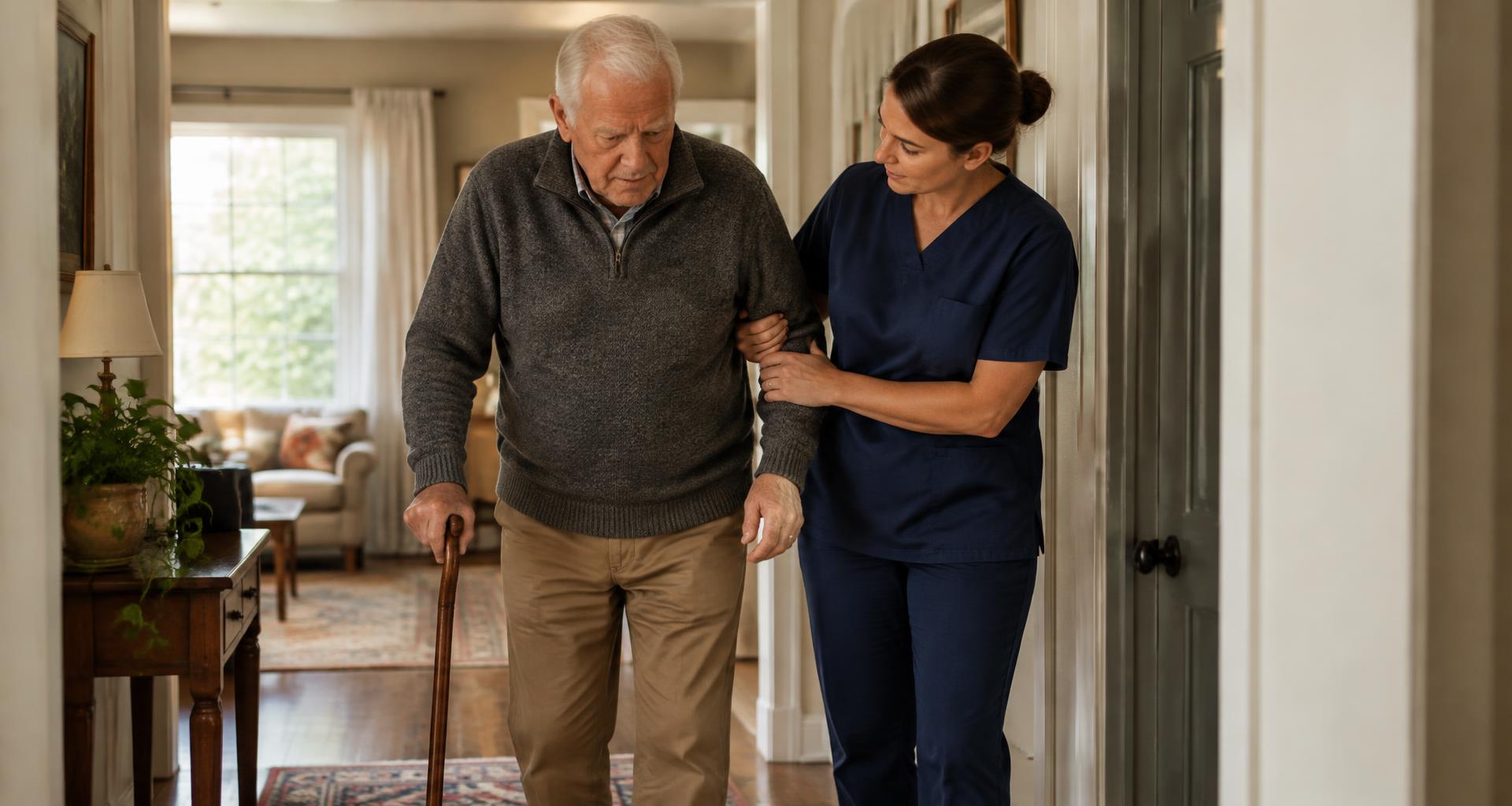
8. Balance Problems and Fall Risk
Parkinson's disease often impacts:
-
Balance
-
Gait stability
-
Reaction time
-
Postural control
This increases fall risk significantly.
Families may initially notice:
Falls frequently become one of the biggest turning points in Parkinson's
progression.
A single hospitalization can dramatically accelerate decline.
9. Freezing Episodes
Freezing occurs when the brain temporarily struggles to initiate
movement.
The individual may feel as though their feet are "stuck."
This often happens:
-
In narrow spaces
-
During turns
-
Near doorways
-
Under stress
-
When rushed
Freezing can create:
-
Panic
-
Increased fall risk
-
Emotional distress
-
Loss of confidence
Specialized Parkinson's caregiver training becomes extremely important
in managing these situations safely.
10. Swallowing and Eating Difficulties
Many families do not initially realize Parkinson's disease can affect
swallowing.
Signs may include:
Swallowing issues should never be ignored because they can increase:
-
Aspiration risk
-
Pneumonia risk
-
Malnutrition
-
Dehydration
Why Families Often Miss the Early Signs
Parkinson's disease typically develops gradually.
There is rarely one dramatic moment.
Instead, families adapt slowly to increasing changes until they suddenly
realize:
"Things have become much harder."
The progression may feel almost invisible in the beginning because
symptoms emerge incrementally.
And many symptoms appear unrelated at first glance.
A quieter voice does not immediately seem connected to balance problems.
Fatigue does not automatically suggest neurological disease.
But together, these patterns begin telling a larger story.
Why Specialized Parkinson's Care at Home Matters
Parkinson's disease requires far more than ordinary caregiving.
Effective Parkinson's home care often involves:
-
Medication timing awareness
-
Fall prevention strategies
-
Mobility support
-
Freezing episode management
-
Cognitive support
-
Swallowing awareness
-
Emotional reassurance
-
Structured routines
-
Exercise and movement encouragement
-
Environmental optimization
At Angels on Call Homecare, specialized Parkinson's support is built
around preserving dignity, mobility, independence, emotional wellbeing,
and quality of life at home through clinically guided,
relationship-centered care models.
Because Parkinson's disease affects the entire human experience, not
simply movement.
The Emotional Reality Families Experience
Families navigating Parkinson's disease often grieve gradually.
Not only because of symptom progression.
But because they witness subtle changes in:
-
Personality
-
Independence
-
Confidence
-
Communication
-
Energy
-
Routine
-
Identity
And yet many individuals living with Parkinson's continue fighting every
day to preserve normalcy, purpose, and autonomy.
That reality deserves extraordinary compassion and support.
Key Takeaways
-
Parkinson's disease involves far more than tremors
-
Early symptoms often include fatigue, slowed movement, softer speech,
emotional changes, sleep disruption, and cognitive strain
-
Balance instability and freezing episodes significantly increase fall
risk
-
Parkinson's disease can impact swallowing, communication, and
emotional wellbeing
-
Earlier recognition often improves long-term care planning and quality
of life
-
Specialized Parkinson's care at home requires structured,
neurologically informed support approaches
When Families Should Seek Additional Support
Families should consider additional Parkinson's support when they
notice:
-
Increasing falls or near-falls
-
Medication timing difficulties
-
Freezing episodes
-
Weight loss or swallowing concerns
-
Caregiver exhaustion
-
Sleep disruption
-
Increased confusion or cognitive decline
-
Difficulty with mobility or transfers
-
Emotional withdrawal or depression
Early support often preserves independence longer.
Frequently Asked Questions
What are the earliest signs of Parkinson's disease?
Early signs may include slowed movement, softer speech, fatigue, reduced
facial expression, sleep changes, balance instability, anxiety,
depression, and subtle cognitive difficulties.
Is Parkinson's disease only a movement disorder?
No. Parkinson's disease can also affect cognition, mood, sleep,
swallowing, speech, energy levels, and emotional wellbeing.
What causes freezing in Parkinson's disease?
Freezing occurs when the brain temporarily struggles to initiate
movement, often during stress, turning, or navigating tight spaces.
Can Parkinson's patients safely remain at home?
Yes. Many individuals living with Parkinson's disease can remain safely
at home with proper support systems, structured care, fall prevention,
and specialized homecare services.
Why is specialized Parkinson's homecare important?
Parkinson's care requires understanding medication timing, mobility
changes, fall prevention, freezing episodes, cognitive shifts,
swallowing concerns, and emotional support needs.
About the Author
Eric J. Dalton is a Dementia and Parkinson's care strategist and
advocate for dignity-centered aging at home. Through leadership at
Angels on Call Homecare and development of Aging in Place Redefined,
his work focuses on advancing specialized neurological care models that
preserve independence, emotional wellbeing, safety, and purpose for
families navigating complex cognitive and movement-related conditions.
-
Parkinson's Daily Rhythm & Care Insights Tool
-
Home Safety Risk Scanner
-
Caregiver Burnout Snapshot
-
Care Transition Readiness Assessment
-
"What Stage Are We In?" Cognitive Changes Guide
Available through Aging in Place Redefined.