When families begin searching for Parkinson's care at home, they often ask: "What kind of help do we need?" At first, the answer may seem simple, help with daily tasks, meals, transportation, personal care, safety.
But Parkinson's disease often requires a deeper understanding. Because Parkinson's care is not just about what someone needs help doing. It is about understanding why those activities are becoming harder. That is why the best Parkinson's homecare is not simply assistance. It is specialized support designed around the person living with Parkinson's.
Quick Answer: What Should Parkinson's Homecare Include?
The best Parkinson's homecare goes beyond daily task assistance. It should include an understanding of movement changes, medication timing and "on/off" fluctuations, freezing episodes, fall prevention, cognitive awareness, and meaningful engagement. Care should adapt to the person's daily rhythm, not force the person into a rigid schedule.
Key Takeaways
- Parkinson's care requires understanding the "why" behind movement challenges, not just assisting with tasks.
- Medication timing and "on/off" periods are central to quality Parkinson's care.
- Mobility support should protect confidence, not just prevent falls.
- Freezing episodes require patience and proper cueing, not rushing.
- Cognitive changes, including Parkinson's disease Dementia, may require an adapted care approach.
- Care should support the whole person, relationships, interests, and purpose matter as much as physical safety.
- Family caregivers, often spouses, need support too.
Why Parkinson's Requires a Different Approach to Care
Parkinson's disease is a progressive neurological condition that affects much more than movement. Beyond the well-known tremors, stiffness, and balance changes, Parkinson's may also impact sleep, energy, speech, swallowing, thinking, mood, and daily routines. Families often discover that Parkinson's changes are not always predictable. Someone may move well one moment and struggle later. This is why effective Parkinson's care must adapt, not hold to a fixed routine that does not match the person's reality.
The Best Parkinson's Homecare Understands Timing
Timing is one of the most important parts of Parkinson's support. Many individuals experience changes throughout the day related to medication effectiveness, commonly described as "on" and "off" periods. During stronger periods, movement may feel easier. During challenging periods, symptoms may increase. Good Parkinson's care considers medication schedules, energy patterns, best times for activities, rest periods, and daily routines. Care should fit the person's rhythm. Not force the person into a structure that does not match their needs.
Mobility Support Should Protect Confidence
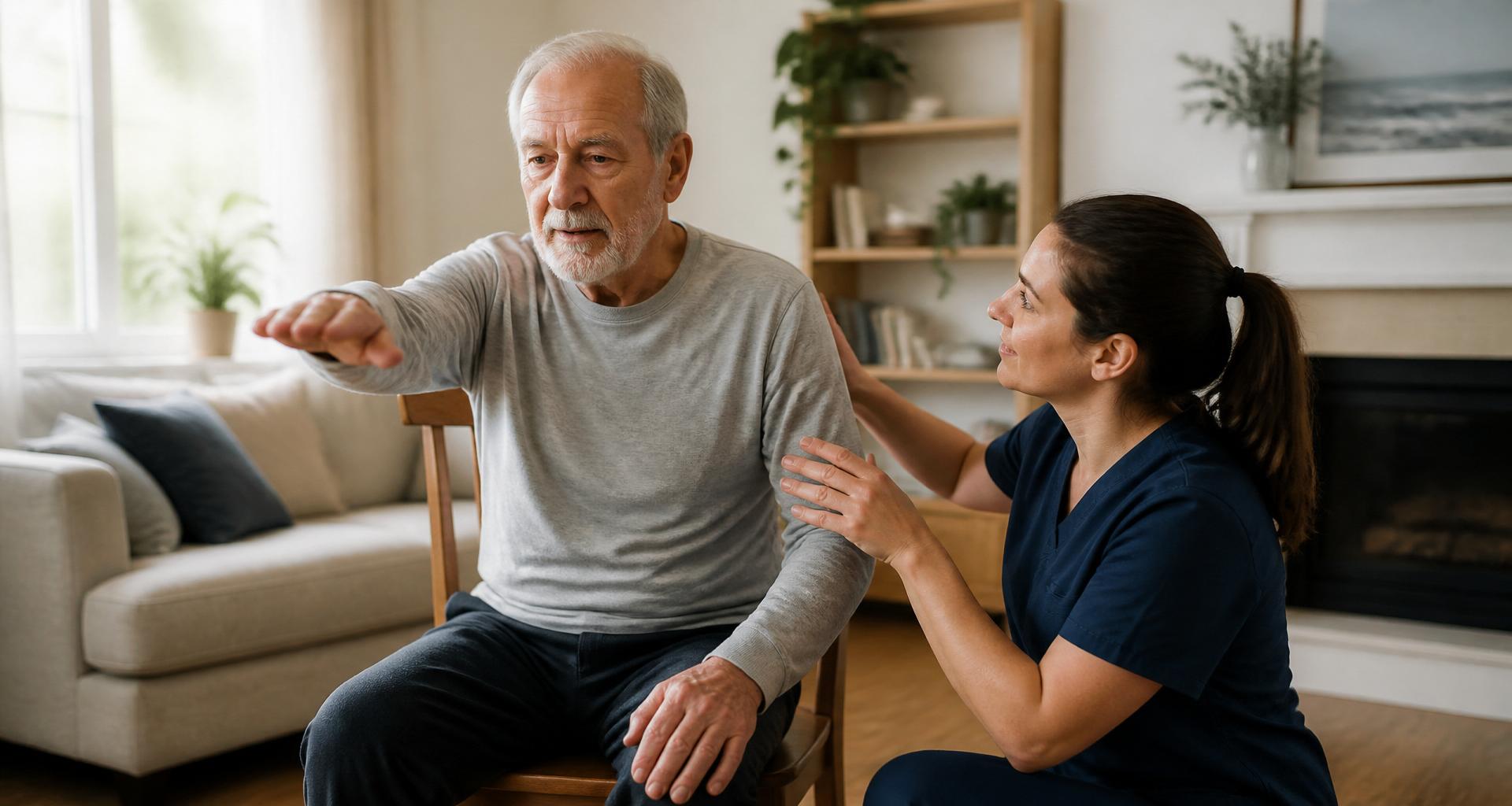
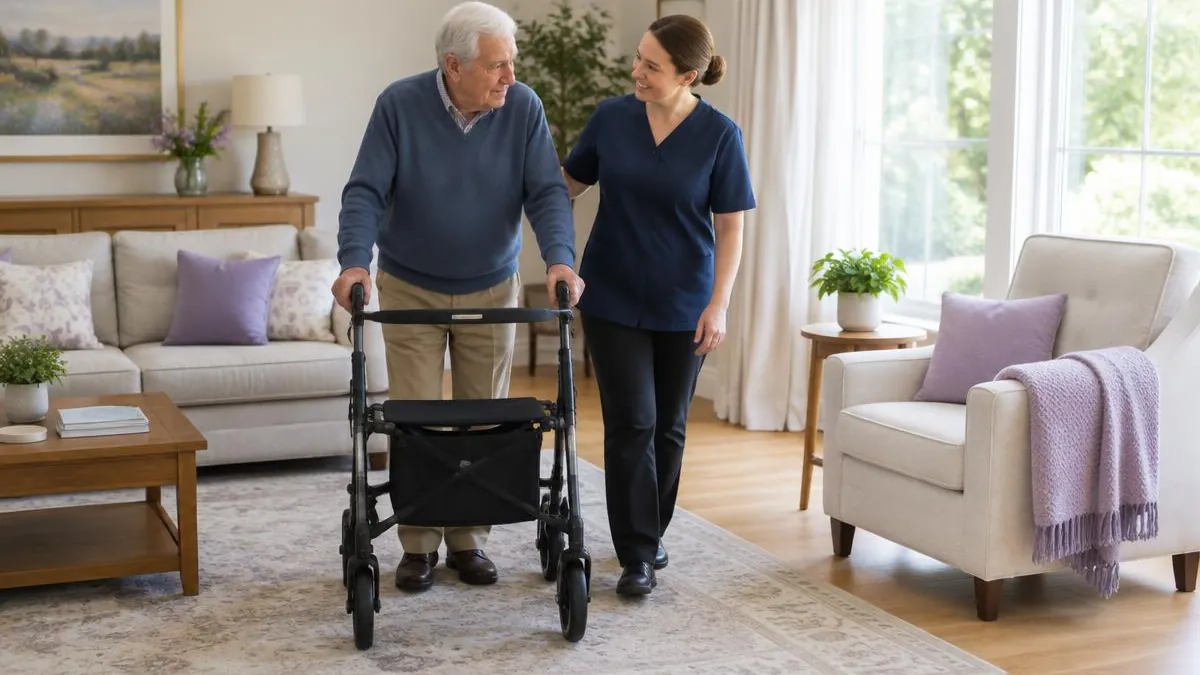
Movement challenges are among the most visible parts of Parkinson's. But mobility support is not just about preventing falls. It is about preserving confidence. Someone afraid of falling may slowly stop doing things they enjoy, walking outside, visiting friends, participating in hobbies. The world becomes smaller. Quality Parkinson's support focuses on maintaining safe movement whenever possible, including transfer support, walking assistance, fall prevention, and encouragement of meaningful activity. See How Do You Reduce Fall Risk in Seniors?
Understanding Freezing Episodes
Freezing of gait can be one of the most frustrating Parkinson's symptoms for families to witness. A person wants to move. They know where they want to go. But their body does not respond the way they expect. Parkinson's is not a motivation problem. It is a neurological condition. Care Professionals supporting someone with Parkinson's should understand patience, cueing strategies, and techniques that help someone navigate these moments, because a rushed or pressured response can sometimes increase risk.
Parkinson's Care Should Include Cognitive Awareness
Many families associate Parkinson's only with physical symptoms. But cognitive changes may occur, including slower processing, memory changes, difficulty planning, hallucinations, and Parkinson's disease Dementia. When movement symptoms and cognitive symptoms happen together, care becomes more complex and must adapt accordingly. See How Does Parkinson's Disease Progress Over Time?
The Importance of Meaningful Engagement
Parkinson's care should never become only about managing decline. A person is not a checklist of symptoms. They are a lifetime of experiences, relationships, interests, passions, and abilities. Good care asks what someone needs help with. Great care also asks what makes that person feel like themselves. That difference matters.
Signs Someone With Parkinson's May Need More Support
- Are falls or near falls increasing?
- Are freezing episodes becoming more challenging?
- Are daily activities requiring more assistance?
- Is medication timing harder to manage?
- Are cognitive changes appearing?
- Is a spouse caregiver becoming overwhelmed?
- Is fear limiting activities your loved one once enjoyed?
Angels on Call Homecare became the first homecare agency in the United States accredited in Certified Parkinson's Disease Care (CPDC), establishing a new benchmark for specialized Parkinson's support at home.
Final Thought
The best Parkinson's care is not built around a disease. It is built around a person. Parkinson's may change movement, routines, and what daily life looks like. But it does not remove identity. The purpose of care is not only helping someone get through the day. It is helping them continue participating in life, with safety, with confidence, with dignity, and with the support needed to keep moving forward.