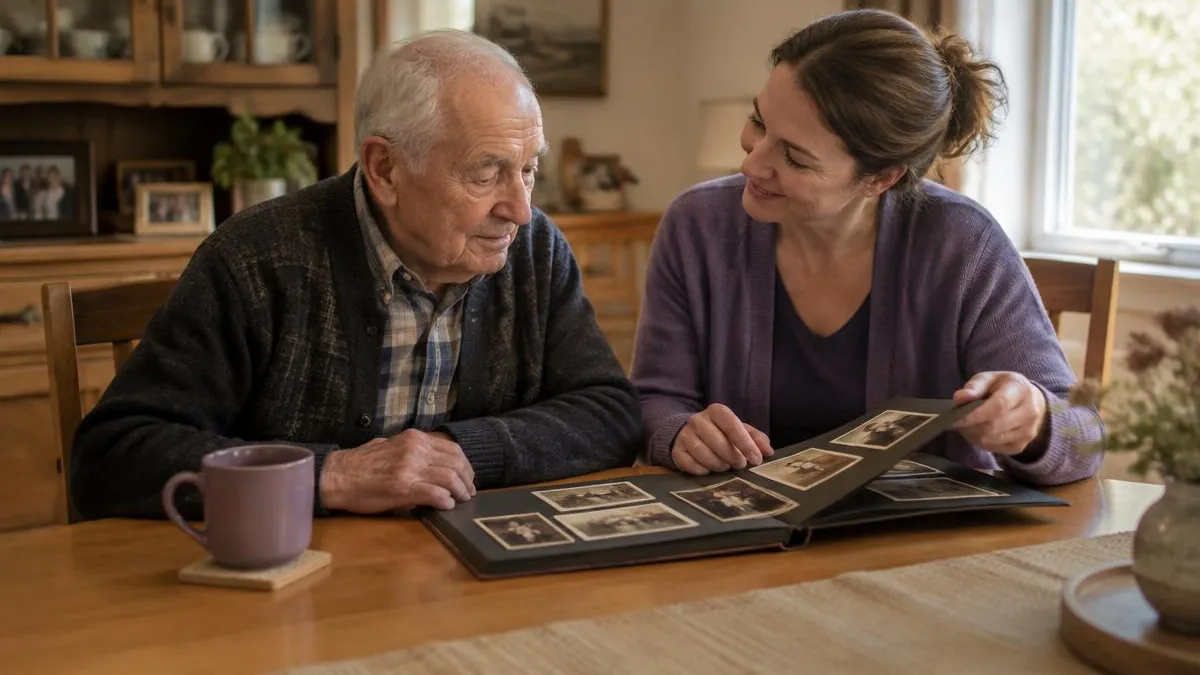
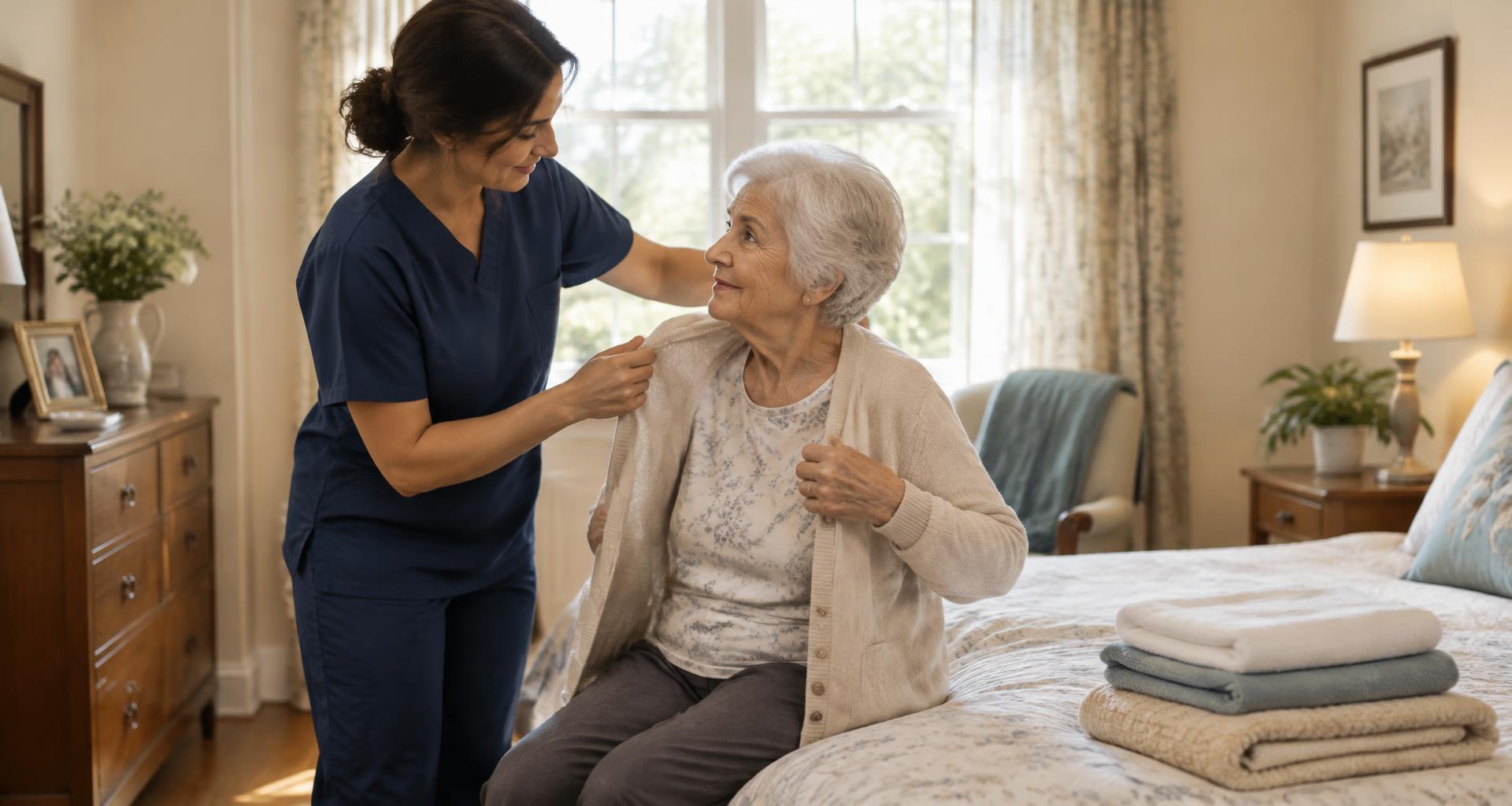
Most families believe Dementia care at home simply means making sure
someone is safe.
Meals are prepared. Medications are reminded. Someone is present in the
house.
But Dementia care is not simply supervision.
And this is where many families unknowingly fall into crisis.
True quality Dementia care at home is not built around "watching"
someone. It is built around understanding how Dementia changes the
brain, how the environment impacts symptoms, how emotional overwhelm
escalates behaviors, and how structure, familiarity, communication, and
meaningful engagement influence quality of life.
There is a profound difference between basic caregiving and specialized
Dementia care.
One reacts to problems.
The other is designed to prevent them.
At Angels on Call Homecare and through the educational platform Aging in
Place, Redefined, the focus is not simply helping people remain at
home longer. The goal is helping people remain connected to identity,
purpose, dignity, routine, and emotional safety while navigating
cognitive change.
Because remaining alive at home is not the same thing as truly living at
home.
The Biggest Misunderstanding in Dementia Care
One of the most damaging myths in healthcare is the belief that Dementia
care is mostly physical assistance.
In reality, the majority of challenges families face are neurological,
emotional, behavioral, environmental, and communication-based.
A person living with Alzheimer's disease or another form of Dementia may
experience:
-
Increased confusion in overstimulating environments
-
Anxiety when routines suddenly change
-
Distress when rushed or corrected
-
Difficulty processing multi-step instructions
-
Fear caused by unfamiliar caregivers
-
Wandering behaviors triggered by overwhelm
-
Agitation rooted in unmet emotional or physical needs
-
Hallucinations or visual misinterpretations
-
Sleep disruption and late-day destabilization
-
Emotional withdrawal and loss of confidence
These symptoms cannot be solved through "sitting with someone."
They require a structured, clinically informed approach.
That is what separates ordinary homecare from specialized memory care at
home.
What Quality Dementia Care at Home Actually Includes
1. Structured Routine and Predictability
For someone living with Dementia, routine becomes neurological
stability.
The Dementia-affected brain struggles with unpredictability. Sudden
changes create stress, confusion, and cognitive fatigue.
Quality Dementia care at home prioritizes:
-
Consistent wake and sleep schedules
-
Familiar meal routines
-
Predictable caregiver assignments
-
Repeated patterns throughout the day
-
Calm transitions between activities
-
Stable environmental cues
When routines are structured properly, many behavioral symptoms decrease
naturally.
Families often notice:
Routine is not "rigidity."
It becomes cognitive support.
2. Specialized Communication Techniques
Many Dementia-related behaviors are actually communication breakdowns.
As cognition changes, individuals may lose the ability to:
-
Find words
-
Process long explanations
-
Understand complex choices
-
Interpret tone correctly
-
Express discomfort clearly
Quality Alzheimer's home care adapts communication instead of forcing
the individual to adapt to the environment.
This includes:
The goal is not winning an argument.
The goal is preserving emotional safety.
3. Meaningful Engagement Instead of Passive Supervision
One of the greatest failures in Dementia care is reducing people to
inactivity.
Television all day is not engagement.
Keeping someone "occupied" is not the same thing as preserving identity.
Meaningful engagement in Dementia care should reflect:
-
Past passions
-
Personal history
-
Emotional familiarity
-
Sensory comfort
-
Cognitive ability
-
Remaining strengths
This might include:
-
Music tied to memory
-
Gardening
-
Folding laundry
-
Baking routines
-
Spiritual practices
-
Art and creativity
-
Sensory experiences
-
Guided conversation
-
Reminiscence activities
Purpose matters deeply in cognitive care.
People living with Dementia still want meaning, autonomy, emotional
connection, and dignity.
Those needs do not disappear because memory changes.
4. Behavioral Understanding Instead of Behavioral Punishment
Many families unintentionally interpret Dementia behaviors incorrectly.
They may label behaviors as:
-
Stubbornness
-
Manipulation
-
Aggression
-
Attention-seeking
-
Refusal
-
Laziness
But behaviors in Dementia are often forms of communication.
A person may become agitated because:
Quality Dementia caregiver support focuses on identifying the root cause
behind behaviors rather than simply reacting to them.
This behavioral understanding dramatically changes outcomes.
5. Environmental Optimization
The home itself can either stabilize or destabilize someone living with
Dementia.
Small environmental details matter more than many people realize.
Quality memory care at home often evaluates:
-
Lighting quality
-
Visual contrast
-
Clutter levels
-
Flooring patterns
-
Mirrors and reflections
-
Noise levels
-
Hallway navigation
-
Bathroom visibility
-
Safety hazards
-
Sensory overstimulation
An overstimulating or visually confusing environment can worsen:
-
Wandering
-
Falls
-
Anxiety
-
Hallucinations
-
Sleep disruption
-
Agitation
Dementia care should not only support the person.
It should support the environment around the person.
6. Caregiver Consistency and Relationship Building
In Dementia care, familiarity matters.
Constant caregiver turnover can increase confusion and emotional
distress.
Quality Dementia homecare prioritizes relationship continuity whenever
possible because trust itself becomes therapeutic.
When caregivers become familiar:
-
Anxiety often decreases
-
Cooperation improves
-
Emotional safety strengthens
-
Communication becomes easier
-
Behavioral escalation may reduce
This is especially important in advanced Dementia care and live-in
Dementia support models.
Relationships are not a side benefit of care.
They are part of the intervention itself.
7. Clinically Guided Oversight
Dementia symptoms are not static.
Needs evolve constantly.
Quality Dementia care at home requires ongoing reassessment and
oversight.
This may involve:
-
RN case management
-
Fall-risk monitoring
-
Medication observations
-
Cognitive change tracking
-
Nutrition concerns
-
Behavioral trend analysis
-
Family coaching
-
Environmental reassessment
-
Hospitalization prevention planning
Without structured oversight, families often remain in reactive crisis
cycles.
Advanced Dementia care aims to identify instability before emergencies
occur.
The Emotional Reality Families Often Carry
Many family caregivers silently live in survival mode for months or
years.
They are exhausted emotionally, physically, and cognitively.
Common signs of caregiver burnout include:
-
Chronic anxiety
-
Sleep disruption
-
Emotional numbness
-
Irritability
-
Guilt
-
Depression
-
Hypervigilance
-
Social isolation
-
Health decline
Families often wait too long to seek help because they believe asking
for support means failure.
It does not.
In many situations, bringing in specialized Dementia caregiver support
earlier actually preserves relationships, reduces conflict, improves
safety, and protects everyone involved.
What Specialized Dementia Care Should Feel Like
Quality Dementia care at home should not feel cold, rushed,
institutional, or task-driven.
It should feel:
-
Calm
-
Familiar
-
Structured
-
Respectful
-
Emotionally safe
-
Purposeful
-
Adaptive
-
Human
The best Dementia care preserves more than physical wellbeing.
It preserves identity.
Key Takeaways
-
Dementia care involves far more than supervision or physical
assistance
-
Structured routines reduce confusion and anxiety
-
Specialized communication methods improve emotional safety
-
Behaviors are often forms of communication, not intentional resistance
-
Meaningful engagement supports identity and wellbeing
-
Environmental factors significantly influence Dementia symptoms
-
Familiar caregivers and continuity improve stability
-
Clinically guided oversight helps prevent crises and hospitalization
-
Family caregiver burnout is common and often overlooked
When to Seek Additional Support
Families should consider additional Dementia homecare support when they
notice:
Earlier intervention often creates better long-term outcomes.
Frequently Asked Questions
What is the difference between basic homecare and specialized Dementia care?
Specialized Dementia care includes behavioral understanding,
communication adaptation, structured routines, cognitive engagement,
environmental optimization, and clinically guided oversight designed
specifically for cognitive conditions.
Can someone with Dementia safely stay at home?
Yes, many individuals living with Dementia can remain safely at home
with the proper support systems, environmental adjustments, supervision,
structure, and specialized care planning.
What are signs someone with Dementia may need more support?
Warning signs include wandering, falls, medication mistakes, caregiver
burnout, agitation, unsafe behaviors, sleep disruption, confusion, and
difficulty managing daily activities independently.
Why do routines matter so much in Dementia care?
Routine reduces cognitive strain and creates neurological stability.
Predictability helps decrease anxiety, confusion, and behavioral
escalation.
Does meaningful engagement actually help Dementia symptoms?
Yes. Purpose-driven engagement can improve emotional wellbeing, reduce
agitation, strengthen identity, and increase moments of connection and
participation.
About the Author
Eric J. Dalton is a Dementia and Parkinson's care strategist, systems
thinker, and advocate for dignity-centered aging at home. As the
architect behind Aging in Place Redefined and Vice President of
Angels on Call Homecare, his work focuses on redefining what clinically
guided, emotionally intelligent care at home can look like for families
navigating cognitive and neurological conditions.
-
Dementia Behavior Decoder Tool
-
Home Safety Risk Assessment
-
Caregiver Burnout Snapshot
-
Dementia Care Decision Compass
-
Parkinson's Daily Rhythm & Care Insights Tool
Available through Aging in Place Redefined.