When someone is diagnosed with Parkinson's disease, one of the first questions families ask is: "What happens next?" It is a simple question. But the answer is deeply personal.
Parkinson's disease does not follow the exact same timeline for everyone. Two people with the same diagnosis may have very different experiences, different symptoms, different progression, different support needs. That uncertainty can feel overwhelming.
But understanding how Parkinson's may change over time helps families prepare, adapt, and create the right support system before they need it.
Quick Answer: How Does Parkinson's Disease Progress?
Parkinson's disease is a progressive neurological condition, meaning symptoms typically change over time. Early stages may involve mild movement changes while someone remains largely independent. Middle stages often require more support with daily activities. Advanced stages may involve significant mobility challenges, cognitive changes, and increased care needs. Progression varies widely, and effective care adapts with the person, not against them.
Key Takeaways
- Parkinson's disease affects much more than movement, sleep, energy, cognition, mood, and speech can all be involved.
- Early-stage Parkinson's often allows for significant independence with the right planning.
- "On" and "off" periods, fluctuations tied to medication timing, are a major part of daily life for many people.
- Freezing episodes are a neurological symptom, not a motivation problem.
- Cognitive changes, including Parkinson's disease Dementia, can develop in some individuals over time.
- Emotional wellbeing, confidence, and social connection matter just as much as physical function.
- Many people living with Parkinson's continue aging at home with appropriate, specialized support.
Early Parkinson's Disease: Maintaining Independence
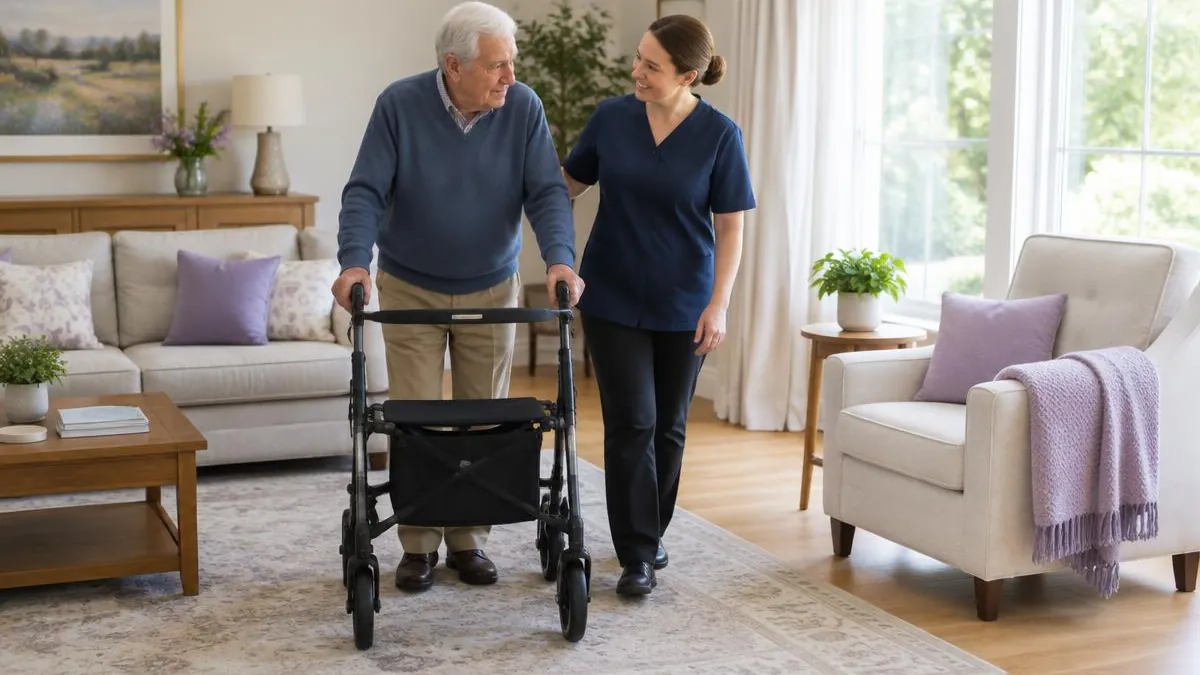
In the earlier stages, many individuals continue living active, independent lives. Symptoms may be mild and may include slight tremor, stiffness, slower movement, smaller handwriting, changes in facial expression, reduced arm swing while walking, and mild balance changes.
At this stage, the focus is often on maintaining strength, routines, and independence. Early planning is not about expecting decline. It is about protecting ability.
Middle Stages: When Daily Life Requires More Adaptation
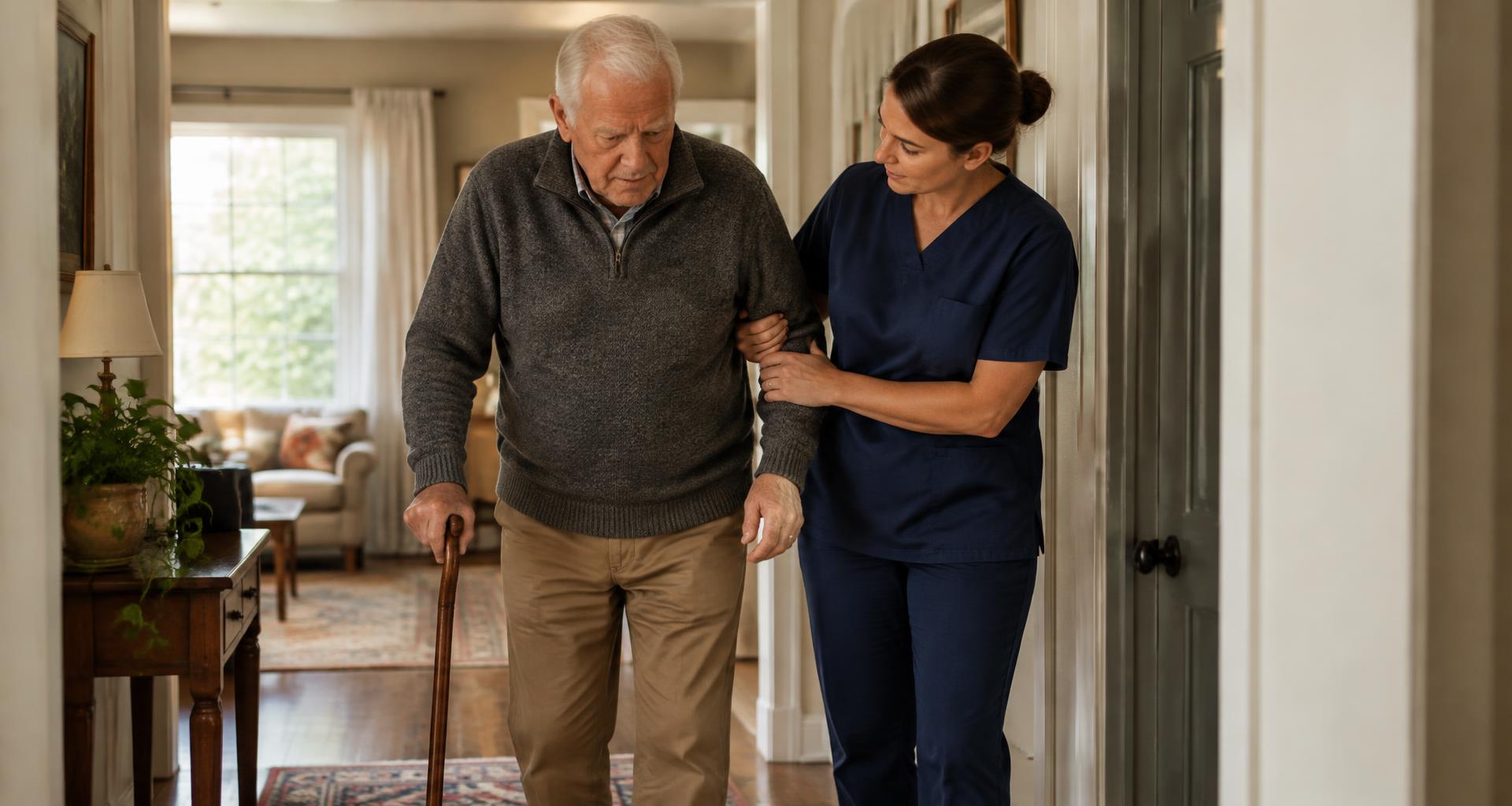
Over time, Parkinson's symptoms may become more noticeable. Things that were once automatic may require more effort, getting dressed, preparing meals, walking safely, getting out of a chair, managing medications. The person may still be very capable, but daily life requires more energy. This is often when families begin adding more support, not because independence is gone, but because preserving independence requires more structure.
Understanding "On" and "Off" Periods
One of the most misunderstood aspects of Parkinson's disease is fluctuation. A person may seem very capable at one point in the day, then struggle hours later. Families sometimes wonder: "How could they do this yesterday but not today?"
"On" periods are times when medication is working well and movement may feel easier. "Off" periods are times when symptoms return or become more challenging. Understanding this rhythm is a major part of Parkinson's care. The goal is designing support around their rhythm, not forcing the person into a rigid schedule.
Advanced Parkinson's Disease: Increasing Support Needs
As Parkinson's progresses, individuals may require more assistance. Changes may include increased fall risk, more difficulty walking, greater assistance with personal care, speech or swallowing challenges, increased fatigue, and cognitive changes. The goal remains the same: supporting the person, not just managing symptoms. Even when abilities change, purpose, connection, and identity still matter.
Does Parkinson's Disease Affect Thinking and Memory?
Sometimes. While Parkinson's is known for movement symptoms, some individuals experience cognitive changes including slower thinking, difficulty focusing, trouble planning, memory changes, and visual processing difficulties. Some individuals develop Parkinson's disease Dementia. When cognitive and movement symptoms occur together, care often becomes more complex, and specialized support becomes especially important. See What Is the Difference Between Dementia and Alzheimer's Disease?
Parkinson's Progression Is Not Only Physical
One of the biggest mistakes families make is measuring Parkinson's only by physical symptoms. Families should also pay attention to confidence, social connection, emotional wellbeing, independence, and purpose. Someone can receive help physically while still remaining deeply engaged in life. That balance is what good care should protect.
When Should Families Consider Additional Parkinson's Support?
- Are falls or near falls happening?
- Are daily routines taking significantly longer?
- Is medication timing becoming harder to manage?
- Are freezing episodes increasing?
- Is a spouse caregiver becoming overwhelmed?
- Are cognitive changes appearing?
- Is your loved one avoiding activities they once enjoyed?
For specialized Parkinson's care at home, Angels on Call Homecare became the first homecare agency in the United States accredited in Certified Parkinson's Disease Care (CPDC). Read more in Choosing Homecare for Parkinson's Disease
Final Thought
Parkinson's progression is not just a medical journey. It is a human journey. Families are not only managing symptoms. They are protecting routines, relationships, confidence, and purpose. The better question is: "How do we continue supporting the life this person wants to live?" Because great Parkinson's care does not focus only on what is being lost. It protects what remains possible.