For many families, everything changes after a fall. Before the fall, concerns may feel manageable, a little trouble walking, holding onto furniture, moving slower than before.
Then suddenly there is a moment. A phone call. A hospital visit. An injury. A realization that something needs to change. But the goal should not simply be preventing someone from falling. The goal should be helping someone continue living safely, confidently, and independently.
Quick Answer: How Do You Reduce Fall Risk in Seniors?
Fall prevention requires a combination of strategies, not one single fix. Effective approaches include making the home environment safer, supporting strength and mobility, understanding condition-specific risks (particularly for Dementia and Parkinson's disease), reviewing daily routines for high-risk moments, and providing the right level of supervision and support. The goal is not restricting movement, it is enabling safe movement so life can continue fully.
Key Takeaways
- Falls rarely happen for one reason, risk is usually a combination of physical, cognitive, environmental, and behavioral factors.
- Reducing fall risk is not the same as restricting movement, inactivity can actually increase risk over time.
- Dementia creates unique fall risks related to judgment, awareness, and nighttime confusion.
- Parkinson's disease creates specific risks including freezing episodes, posture changes, and slower reactions.
- A fall affects confidence as much as the body, fear of falling can shrink someone's world significantly.
- Reviewing when falls occur helps identify prevention opportunities.
- Specialized homecare can support fall prevention by providing skilled supervision and condition-specific awareness.
Why Falls Become More Common With Age
Fall risk can increase for many reasons, often it is not one single factor but a combination. Changes may involve balance, strength, vision, medications, home environment, reaction time, mobility, and cognitive changes. Small challenges can build over time: a rug that was never a problem before, a poorly lit hallway, a moment of dizziness. Fall prevention begins by understanding the whole picture.
Falls Are Not Just Physical
Someone living with Dementia may experience changes in judgment, awareness of hazards, decision-making, depth perception, and the ability to follow safety instructions. Someone living with Parkinson's disease may experience freezing episodes, balance changes, slower movements, posture changes, and difficulty initiating steps. Effective fall prevention must consider the reason behind the risk, not just the fall itself.
1. Make the Home Environment Safer
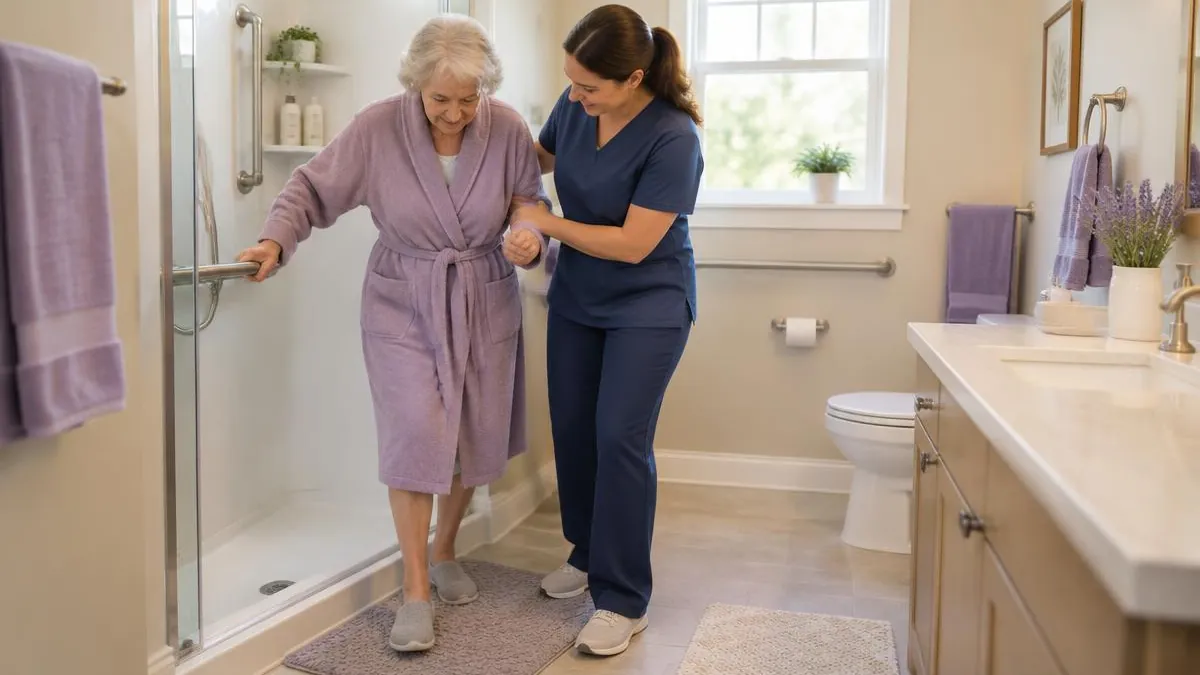
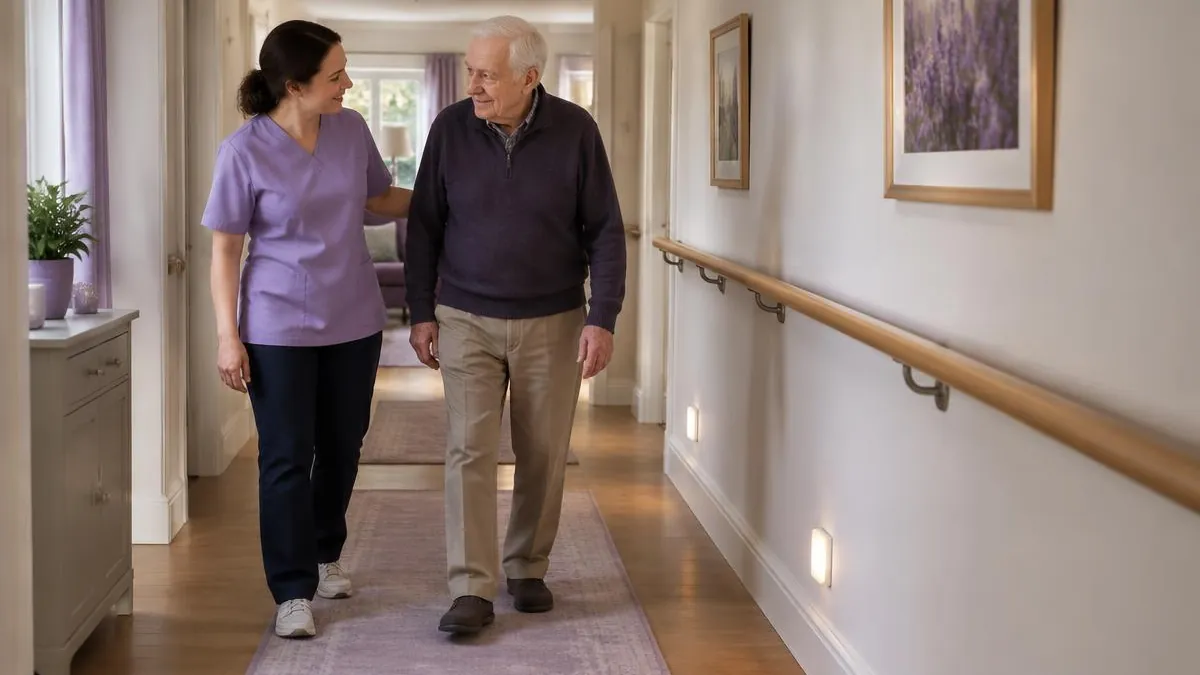
Simple changes can make a meaningful difference: removing tripping hazards, improving lighting, securing rugs, keeping walkways clear, installing grab bars where appropriate, and making commonly used items easier to reach. The goal is not making the home feel clinical. The goal is making the home work better for the person living there.
2. Support Strength and Movement
Sometimes families become so afraid of falls that they encourage a loved one to stop moving. But inactivity can create another problem, weakness, reduced endurance, loss of confidence, and greater dependence over time. Safe activity, when appropriate, helps maintain function. The goal is not avoiding movement. The goal is moving safely.
3. Pay Attention to Changes in Walking
Small changes often appear before major problems: shuffling steps, holding onto furniture, difficulty standing from chairs, hesitation before walking, increased fear of movement, and avoiding previously enjoyed activities. These changes are information. They tell us support may need to adjust before a fall occurs.
4. Understand Parkinson's-Specific Fall Risks
A person with Parkinson's may know exactly what they want their body to do, but their movement does not cooperate. Freezing episodes are a clear example. Support requires patience, understanding, and proper cueing. A rushed or pressured response can sometimes increase risk rather than reduce it. See Choosing Homecare for Parkinson's Disease
A person with Dementia may forget they need assistance, misjudge distance, become confused at night, or ignore mobility devices entirely. This is why reminders alone may stop working over time. The environment and care approach often need to adapt alongside the person's changing awareness and judgment.
6. Recognize Fear After a Fall
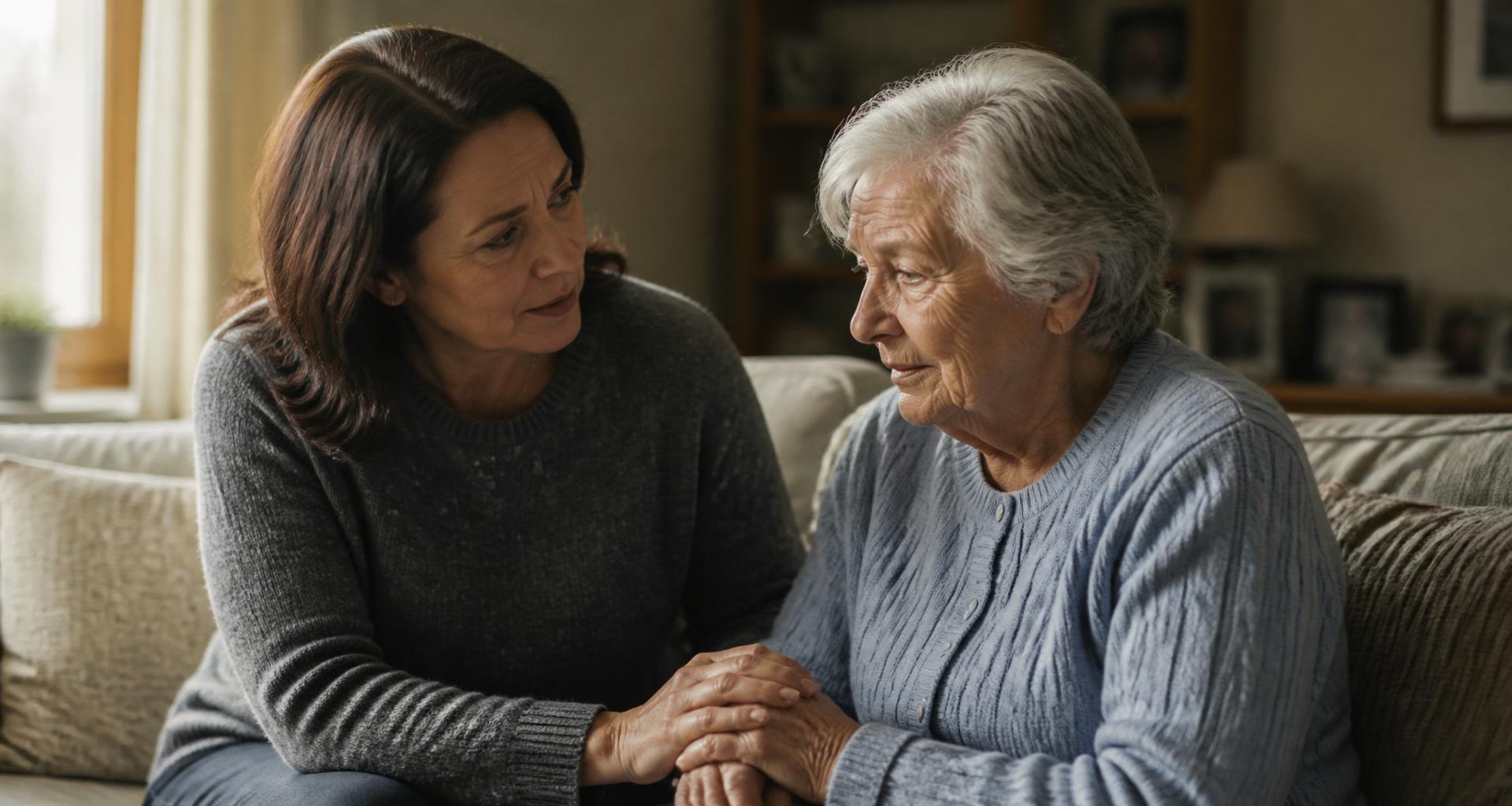
A fall affects more than the body. It can deeply affect confidence. After a fall, some individuals become afraid, they stop participating, stop leaving home, stop doing things they enjoy. The world becomes smaller. Good support helps rebuild confidence, not just prevent another incident. The goal is returning to life, not retreating from it.
When Should Families Consider More Support?
- Has there been a recent fall?
- Have there been multiple near falls?
- Is walking becoming less steady?
- Is your loved one afraid of moving?
- Are nighttime trips unsafe?
- Are Dementia symptoms affecting safety awareness?
- Is Parkinson's affecting mobility and balance?
- Is the family constantly worried?
Families can explore additional safety tools and resources through Aging in Place Redefined, and specialized supervision through Angels on Call Homecare.
Final Thought
A fall should never define a person. It should start a conversation. What changed? What support is needed? How do we protect independence moving forward? The purpose of fall prevention is not creating a smaller, more restricted life. It is helping preserve a fuller one.