Ask most families what Parkinson's care at home requires, and the first answer is almost always medication timing. It's an understandable place to start, Parkinson's medications are famously time-sensitive, and a dose given even thirty minutes late can visibly affect mobility and symptom control for hours. But medication timing, while genuinely important, is only one piece of what specialized Parkinson's care actually requires.
Parkinson's disease affects far more than movement. It touches balance, speech, swallowing, sleep, mood, cognition, and the ability to initiate motion at all, a phenomenon known as freezing. A homecare model built primarily around remembering pill schedules will miss most of what determines whether someone with Parkinson's can safely and comfortably remain at home.
Understanding Freezing Episodes and Cueing Techniques
One of the most disorienting experiences for both individuals with Parkinson's and their families is a freezing episode, a sudden, temporary inability to move, often occurring at transitions like doorways, turns, or the first step out of a chair. To someone unfamiliar with Parkinson's, this can look like stubbornness or confusion. It is neither. It is a specific motor phenomenon with specific, learnable interventions.
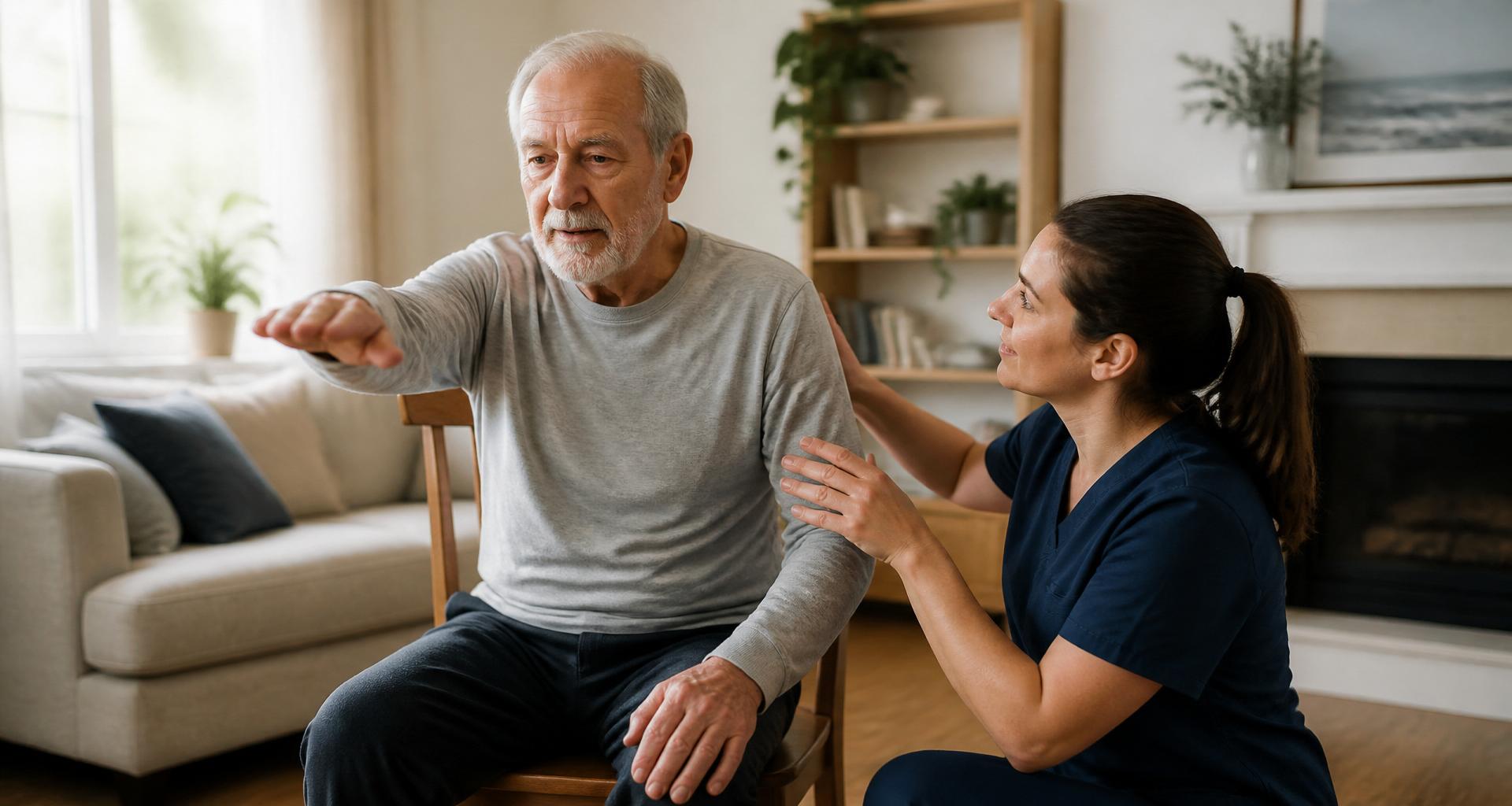
Trained cueing techniques, rhythmic verbal counting, visual cues like a line to step over, or a deliberate shift in weight, can often interrupt a freezing episode and restore movement. Care Professionals without Parkinson's-specific training frequently don't recognize freezing for what it is, which can lead to rushed handling that increases fall risk rather than reducing it.
Fall Prevention Built for Parkinson's Specifically
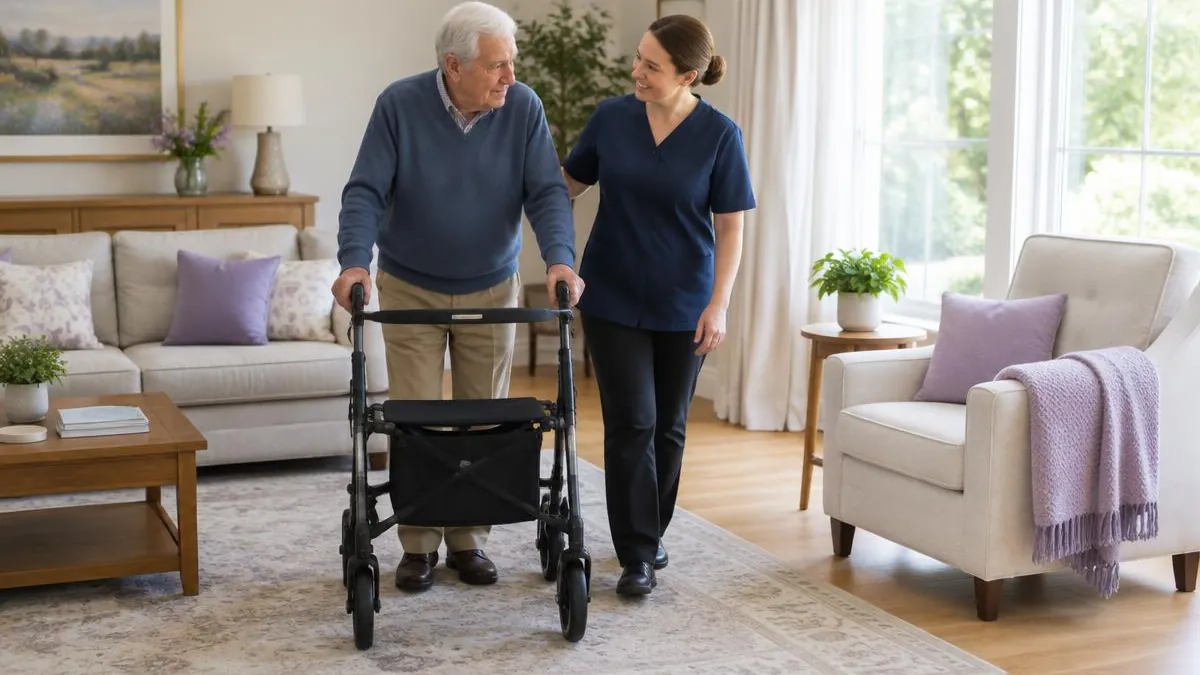
Generic fall-prevention advice, clear the rugs, install grab bars, is a reasonable starting point, but it does not address the specific mobility patterns associated with Parkinson's: shuffling gait, reduced arm swing, postural instability, and a tendency to lean backward that increases the risk of falling during transfers. Specialized Parkinson's care incorporates fall-prevention strategies built around these specific patterns, along with an understanding of how fatigue, medication timing, and time of day all affect fall risk on any given day.
Fatigue Is Not Laziness, It's Neurological
Families sometimes describe frustration with a loved one who seems to "give up" on activities partway through the day. In Parkinson's, this is frequently fatigue, a well-documented, neurologically rooted symptom that is distinct from simply feeling tired. It doesn't always respond to rest the way ordinary fatigue does, and it can fluctuate significantly depending on medication cycles, the complexity of the day, and cognitive demand.
Specialized Parkinson's care builds daily structure around this reality, pacing activities, anticipating lower-energy periods, and avoiding the trap of treating fatigue as a motivational issue rather than a symptom that deserves accommodation.
The Emotional Side of Parkinson's Families Rarely Discuss
Parkinson's carries a significant emotional weight that often goes unaddressed in care planning. Depression and anxiety are common non-motor symptoms of the disease itself, not simply a reasonable reaction to diagnosis. Cognitive changes can emerge alongside motor symptoms, sometimes years into the disease. And the unpredictability of symptoms, a good morning followed by a difficult afternoon, can be genuinely destabilizing for both the individual and the family trying to plan around it.
Specialized Parkinson's care makes room for this reality rather than treating emotional changes as separate from the clinical picture. Support that only addresses movement while ignoring mood, cognition, and the psychological weight of a progressive diagnosis is, by definition, incomplete.
What Specialized Training Actually Covers
Angels on Call Homecare delivers Parkinson's-specific expertise through its Neuro-Mobility Angels (NMA) program, a specialized training and service line built exclusively around the movement, mobility, and support needs unique to Parkinson's and related movement disorders. This training sits alongside the organization's distinction as the first homecare agency in the United States accredited in Certified Parkinson's Disease Care (CPDC) through PMD Alliance, an accreditation that reflects a structured, ongoing commitment to Parkinson's-specific clinical education, not a single certificate earned once.
Questions to Ask When Evaluating Parkinson's Homecare
Families evaluating homecare for Parkinson's should ask specific, pointed questions: What training do your Care Professionals receive specifically for Parkinson's, beyond general Dementia or elder care training? How do you handle freezing episodes? What is your approach to fall prevention that accounts for Parkinson's-specific mobility patterns? How do you address fatigue and the emotional dimensions of the disease, not just the physical ones? The depth and specificity of the answers reveal far more than any marketing language.
Key Takeaways
- Medication timing matters, but it is only one part of specialized Parkinson's care.
- Freezing episodes respond to specific cueing techniques, not rushing or generic redirection.
- Fall prevention for Parkinson's must account for its specific gait and balance patterns.
- Parkinson's fatigue is neurological, not motivational, and should be planned around rather than pushed through.
- Emotional and cognitive changes are core symptoms of Parkinson's, not separate concerns.
External Authority References