Ask a homecare agency who provides clinical oversight, and the answer is almost always the same: "Our RNs supervise every case." It's a reassuring answer. It's also frequently a misleading one, because "supervision" and RN Case Manager oversight are not the same thing, and for families navigating Dementia or Parkinson's care at home, the difference is where safety, continuity, and quality of life quietly get decided.
The Word "Supervision" Can Mean Very Little
In many standard homecare arrangements, RN "supervision" means a nurse signs the initial care plan, visits every 60 or 90 days per state regulation, and reappears when something has already gone wrong. Between those visits, the care that actually happens in the home is guided by whatever the Care Professional remembers from a training session, and whatever the family has time to explain in the moment. That is not oversight. That is compliance with a minimum standard.
Specialized Dementia and Parkinson's care requires something structurally different. Not a nurse who arrives when a crisis is already in motion, but a clinician who is present in the arc of the case, who knows the person, the trajectory of their condition, the family dynamics around it, and the small changes that tend to precede larger events.
What Proactive Case Management Actually Looks Like
An RN Case Manager, in the model Angels on Call Homecare uses, has a defined and continuous role from the day care begins. That role includes:
- A clinical intake that goes beyond a task list. Medical history, medication reconciliation, cognitive baseline, mobility patterns, sleep patterns, behavioral triggers, family communication preferences, and the specific language the family uses to describe the person they love.
- A care plan built for progression, not just presence. In Dementia and Parkinson's, needs evolve. The care plan is designed to anticipate the next stage, not react to it after the fact.
- Structured reassessment on a defined cadence. Not "as needed," which almost always means "after a fall." Regular reviews of the care plan against what the Care Professional is observing in the home.
- Direct family communication. The RN Case Manager is a named clinical contact for the family, not a stranger who returns a call two days later.
- Coordination with outside clinicians. Neurologists, movement disorder specialists, primary care, hospital discharge teams. The RN Case Manager is the connective tissue that keeps the outpatient plan and the in-home reality aligned.
That is a different job than "supervising caregivers." It is the clinical spine of the care itself.
Why This Matters More in Dementia and Parkinson's Care
Both conditions are progressive. Both involve subtle changes that only look significant in retrospect, a new hesitation before standing, a small drift in a familiar routine, an unfamiliar irritability at a specific time of day. Care Professionals in the home see these signals first. Without a clinician who receives and interprets them in real time, they get lost.
In Parkinson's, a shift in medication response might be the earliest sign that the therapeutic window is changing. In Dementia, an increase in late-day agitation might reflect a new physical discomfort the person can no longer easily communicate. Recognizing these patterns, and translating them into an adjusted care plan or a referral back to the neurologist, is exactly what proactive case management is for. It is the difference between care that prevents crises and care that documents them.
What This Looks Like Day-to-Day
RN Case Manager oversight, done well, is often invisible to families in the way any well-functioning infrastructure is invisible. What families notice instead is that:
- The Care Professional in the home seems to know what to do when something new happens.
- Care plan changes are anticipated and explained, not sprung on them in a phone call.
- Communication about medication changes, mood, sleep, and mobility is proactive.
- Hospitalization decisions, when they are unavoidable, are made with clinical context, not in a panic.
- The family feels like there is someone who is holding the whole picture, not just the individual shift.
That last point is the one that changes lives. Families navigating advanced Dementia or Parkinson's do not need more information thrown at them. They need someone who is already integrating it.
How to Tell the Difference When Evaluating a Provider
A few direct questions surface the distinction quickly:
- Who is the named clinician assigned to my loved one's case, and how often are they involved?
- What is the reassessment cadence, and what triggers a re-evaluation outside of that cadence?
- How does the RN coordinate with our neurologist, primary care, and hospital teams when needed?
- If something changes in the home, behaviorally, physically, or emotionally, what is the process for that reaching the RN?
- Is the RN Case Manager the same person over time, or does the role rotate?
The specificity of the answers tells you whether you're looking at genuine clinical oversight or a compliance signature on a form.
Key Takeaways
- "Supervision" in homecare often meets a regulatory minimum, not a clinical one.
- RN Case Manager oversight is a defined, continuous clinical role, not periodic check-ins.
- Proactive case management is especially critical in progressive conditions like Dementia and Parkinson's.
- Care Professionals in the home see the earliest signals of change; case management turns those signals into action.
- The right questions to a provider will surface the difference between oversight and paperwork quickly.
External Authority References
About the Author
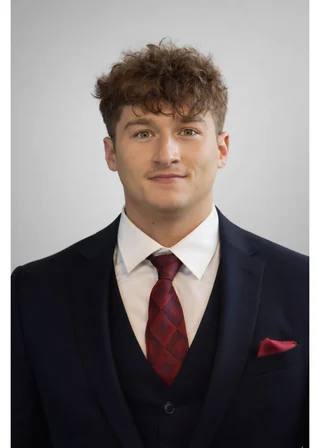
Eric J. Dalton
Vice President, Angels on Call Homecare
CDES · CDCP · Dementia Care Specialist · Montessori Dementia Capable Certification · Teepa Snow Inspired Certification · CPDC · Parkinson's Foundation Site Champion · Aging in Place Essentials Professional
Dementia and Parkinson's care strategist, systems thinker, and advocate for dignity-centered aging at home. Through Aging in Place Redefined and leadership at Angels on Call Homecare, his work focuses on redefining advanced, emotionally intelligent, clinically guided care at home for families navigating cognitive and neurological conditions.
Written and reviewed by Eric J. Dalton. Last reviewed Jul 6, 2026. See full credentials