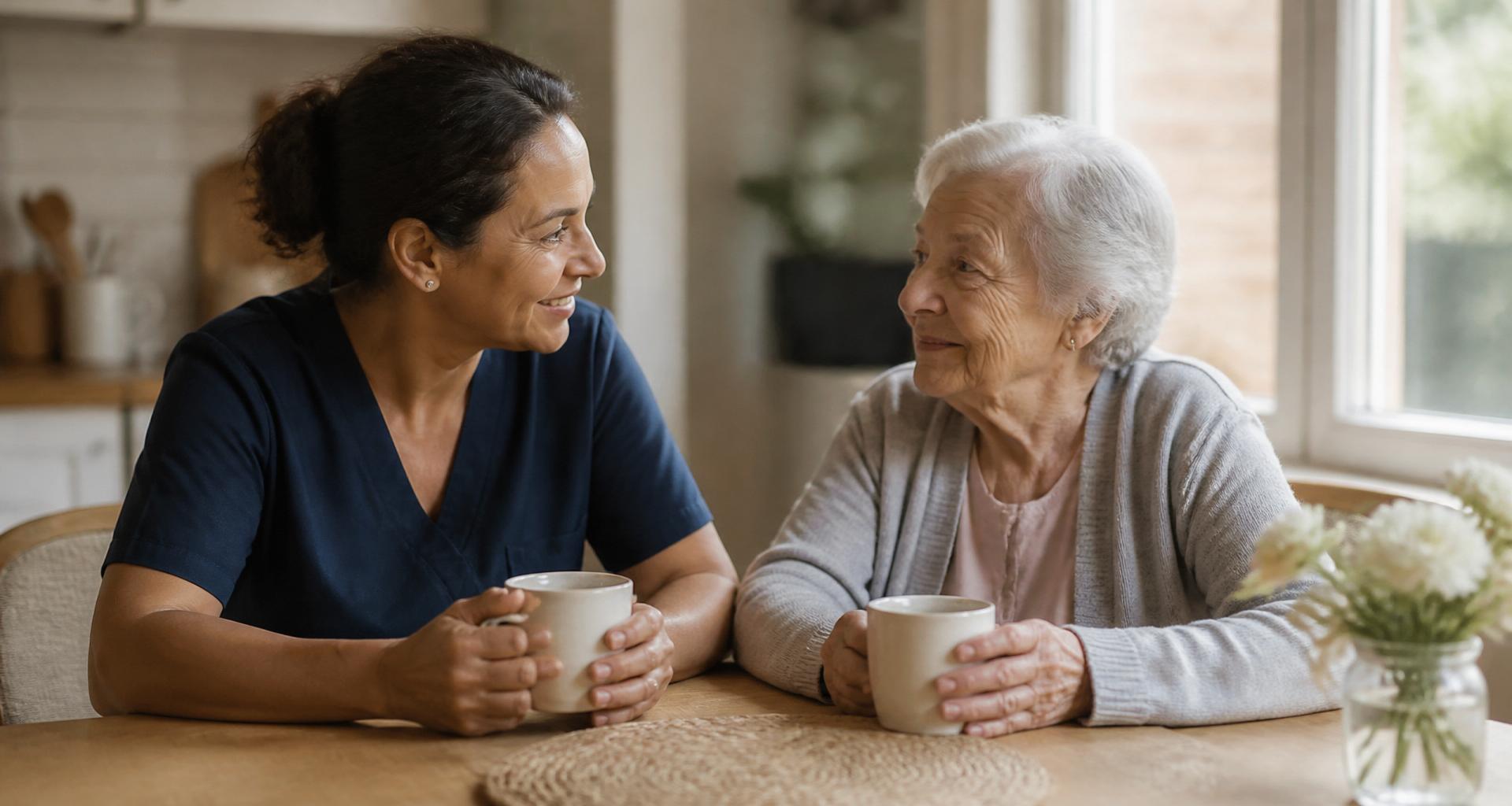
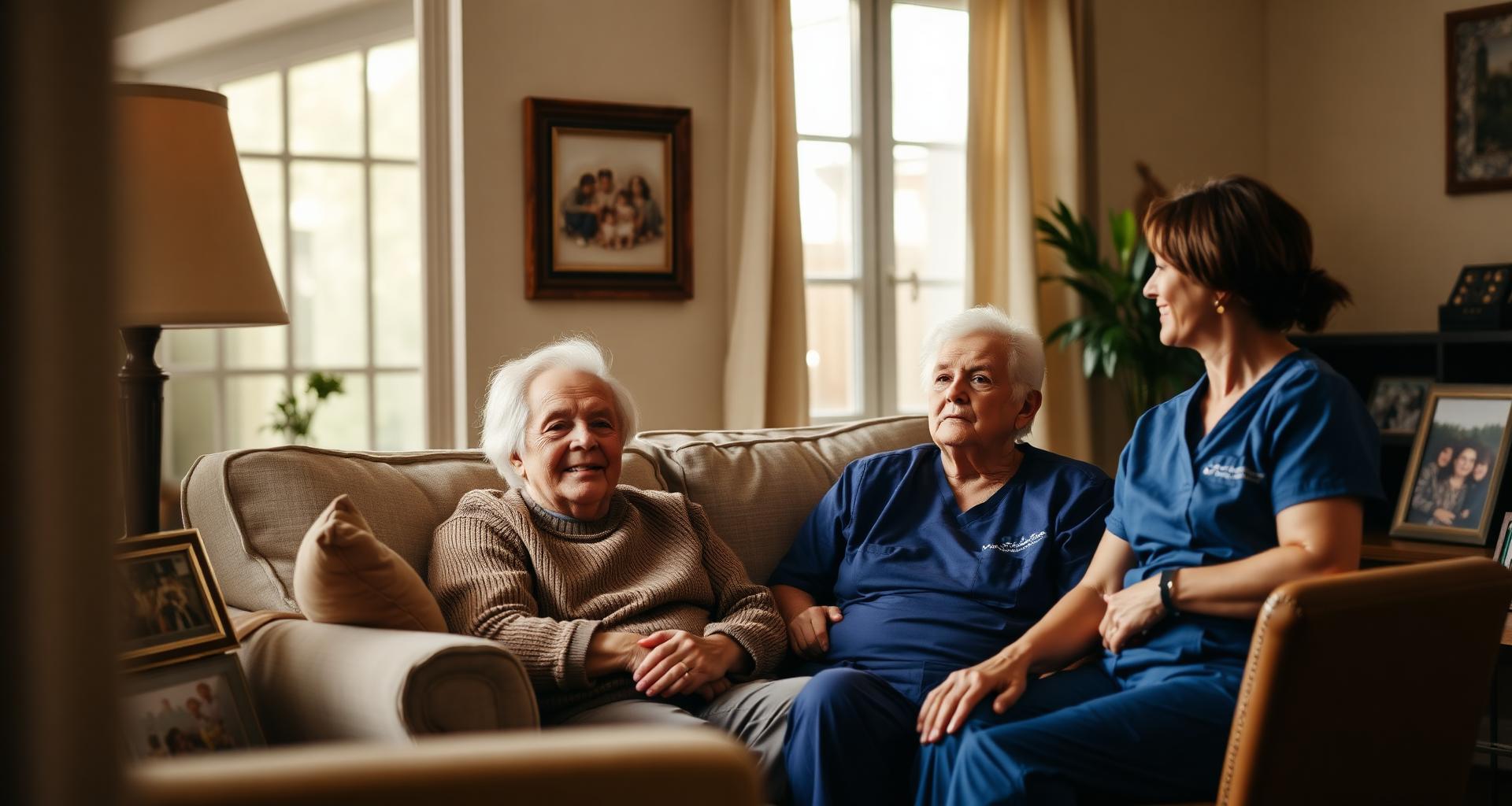
When families first consider live-in care, they usually frame it in terms of coverage: someone in the home around the clock, available if something happens overnight, present so a family member doesn't have to be. That framing isn't wrong, but it captures only the logistical layer of what live-in care actually provides. For individuals living with Dementia or Parkinson's, the deeper and more clinically significant value of live-in care is continuity, and continuity changes outcomes in ways that shift-based coverage simply cannot replicate.
The Neuroscience of Familiarity
In Dementia care specifically, familiarity is not a matter of comfort alone. It is neurologically significant. A person who interacts with the same Care Professional consistently, the same voice, the same rhythm of greeting, the same sequence of a morning routine, builds a form of relational familiarity that gets encoded even when explicit memory is significantly compromised. That familiarity functions as cognitive scaffolding. It reduces the amount of neurological effort required to navigate an already demanding day, and it directly influences how frequently and how intensely behavioral expression occurs.
Parkinson's care benefits from a related but distinct version of the same principle: a consistent Care Professional learns the specific rhythm of a person's freezing episodes, their fluctuating energy across a medication cycle, and the subtle signs that a fall risk is rising before it becomes visible to someone less familiar with that individual's patterns.
What Happens When Continuity Breaks
Every time a person with Dementia encounters an unfamiliar Care Professional, they are, from a neurological standpoint, encountering a stranger in their own home. For someone already working hard to process their environment, orient themselves in time, and communicate needs that language no longer easily carries, the arrival of an unfamiliar person is not a neutral event. It is an additional cognitive and emotional demand layered on top of everything else that day already requires.
This is precisely why rotating shift-based models, however well-intentioned, can quietly undermine the stability they are meant to provide. A schedule built purely around staffing convenience, rather than around the relational needs of the person receiving care, introduces exactly the kind of disruption that increases agitation, confusion, and resistance to care.
Overnight Support: More Than Just Presence
Overnight hours carry particular weight in both Dementia and Parkinson's care. Sleep disruption, nighttime confusion, and increased fall risk during nighttime transfers are common in both conditions. A consistent overnight Care Professional who already understands a person's nighttime patterns, what tends to wake them, what settles them back down, how their mobility changes after dark compared to daytime, brings a level of preparedness that a rotating or unfamiliar presence cannot match, regardless of how capable that individual caregiver may be in the abstract.
Couples Care and the Cost of Unnecessary Separation
For couples navigating a Dementia or Parkinson's diagnosis together, continuity-based live-in care carries an additional dimension: it can be structured to support both individuals within the same household, preserving a relationship that might otherwise be strained or separated by the logistics of care. Couples often decline faster when separated, not because separation is medically necessary, but because the relational and emotional stability of remaining together provides its own form of support that facility-based or fragmented care arrangements often cannot preserve.
How Angels on Call Homecare Structures Live-In Continuity
Angels on Call Homecare treats live-in care as a structured continuity model, not a staffing arrangement. Care Professionals are matched deliberately, with continuity as a stated priority rather than an incidental outcome, and every live-in relationship is supported by RN Case Manager oversight to ensure that the consistency families receive is paired with ongoing clinical guidance as needs evolve.
What to Ask Before Choosing a Live-In Care Provider
Families evaluating live-in care should ask directly: How do you approach continuity, and what is your actual model when the primary Care Professional is unavailable? How are Care Professionals matched to a specific individual's needs and personality? Is clinical oversight built into the live-in arrangement, or is it a separate service? The specificity of the answer to the continuity question, in particular, tends to reveal whether a provider is offering structured, relationship-centered care, or simply filling shifts.
Key Takeaways
- Live-in care's greatest clinical value is continuity, not simply round-the-clock presence.
- Familiarity with a consistent Care Professional reduces cognitive demand and behavioral escalation in Dementia care.
- Rotating, unfamiliar caregivers can inadvertently increase agitation and confusion.
- Overnight continuity supports better recognition of nighttime patterns and fall risk.
- Couples Care structured around continuity can help prevent unnecessary separation and its emotional cost.
External Authority References