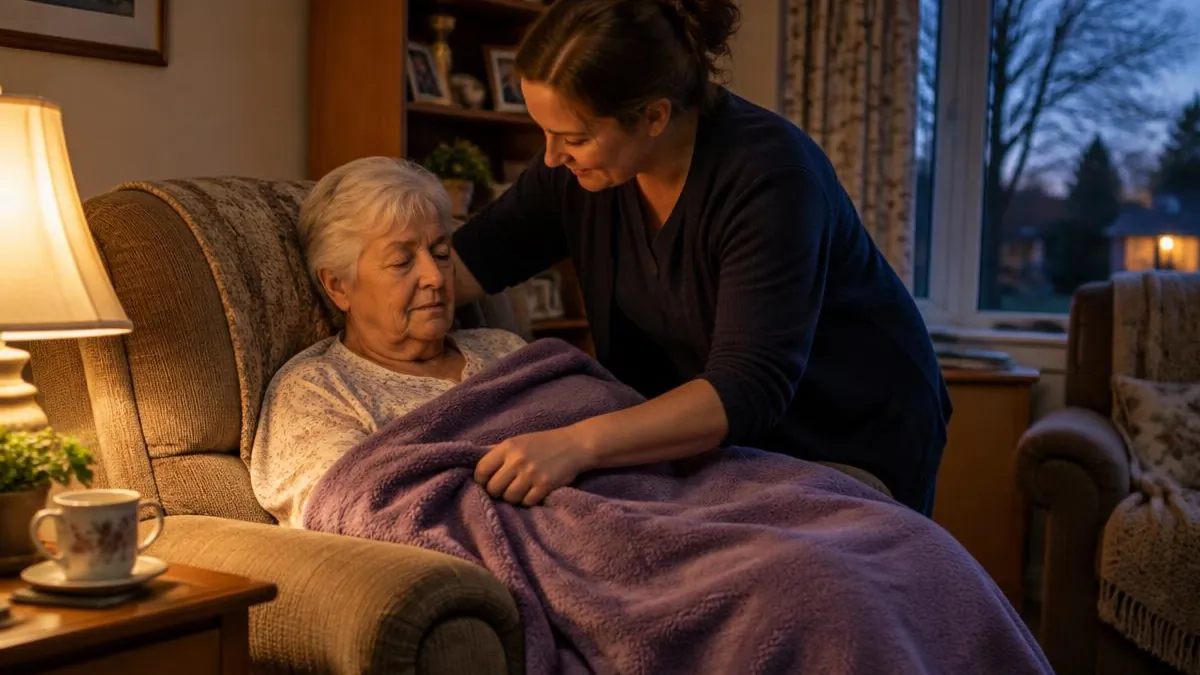
Few decisions weigh heavier on a family than realizing a loved one may no longer be safe without ongoing support. Most families do not wake up one morning and decide: "It is time for 24-hour care."
Usually, it happens slowly. A small concern becomes a pattern. A pattern becomes a risk. A risk becomes a crisis. A fall. A forgotten medication. A frightening moment of confusion. A spouse caregiver who has quietly reached exhaustion.
Eventually the question changes. Not: "Can Mom or Dad technically still live at home?" But: "Is the current support system enough to keep them safe, healthy, and living well?"
Quick Answer: When Should a Family Consider 24-Hour Care?
Families should consider 24-hour care when any combination of these is present: falls or near-falls are increasing, a loved one is unsafe when alone, nights need more support, Dementia or Parkinson's symptoms require more structure than current support provides, or a family caregiver has reached the limits of what one person can sustain. The goal of 24-hour care is not removing independence, it is protecting what remains possible.
Key Takeaways
- Most families recognize the need for 24-hour care gradually, not all at once.
- Falls, nighttime safety risks, and caregiver exhaustion are among the most common triggers.
- Dementia progression and Parkinson's disease symptoms often drive the shift to around-the-clock support.
- More care does not always mean less independence, sometimes it protects independence.
- Live-in care and 24-hour shift care are different models suited to different needs.
- Planning before a crisis creates better outcomes than reacting after one.
What Is 24-Hour Care?
24-hour care provides continuous support throughout the day and night for individuals who need a higher level of assistance, supervision, or safety monitoring at home. Unlike shorter visits that help with specific tasks, 24-hour care is designed around ongoing needs, including Dementia-related safety concerns, Parkinson's disease progression, fall risks, mobility challenges, overnight needs, and family caregiver relief.
1. Falls or Near Falls Are Happening More Often
A fall is often the event that forces families into action. But the warning signs usually come earlier: holding onto furniture, difficulty getting out of a chair, trouble navigating stairs, unsteady walking, fear of moving around. For someone living with Parkinson's disease, freezing episodes, balance changes, or slower reaction times may increase risk. See How Do You Reduce Fall Risk in Seniors?
2. A Loved One Is Unsafe When Alone
Independence and being alone are not always the same thing. Signs someone may need more supervision include leaving appliances on, forgetting important tasks, wandering or leaving home unexpectedly, unsafe decisions, difficulty responding during emergencies, and confusion about time or location.
The question families should ask is not: "What can they do when everything goes right?" The question is: "What happens when something goes wrong?"
3. Nights Are Becoming Difficult or Unsafe
Nighttime changes are one of the biggest reasons families explore around-the-clock care. Concerns may include getting up frequently, increased confusion, wandering, falls while going to the bathroom, sleep disruptions, and anxiety at night. Many families can manage daytime needs. The nights become the breaking point, especially when a spouse caregiver is no longer sleeping.
4. Dementia Symptoms Require More Structure
Dementia progression can change the type of support needed. Early on, reminders and occasional assistance may work well. Over time, families may notice more frequent confusion, behavioral changes, resistance to care, difficulty completing familiar routines, and reduced safety awareness. See What Does Sundowning Look Like?
This does not mean someone automatically needs to leave home. It means the care structure may need to evolve.
5. Parkinson's Disease Symptoms Are Becoming Harder to Manage
Families may begin noticing more difficulty moving safely, increased freezing episodes, medication schedules becoming more complex, greater fatigue, trouble completing daily activities, and cognitive changes. Parkinson's care is not only about movement, it is about maintaining routines, safety, confidence, and quality of life. Learn more in How Does Parkinson's Disease Progress Over Time?
6. A Family Caregiver Cannot Continue at the Current Pace
Sometimes the clearest sign is not only the person receiving care. It is the person providing it. Family caregivers often push themselves far beyond what is sustainable. Warning signs include constant worry, poor sleep, physical exhaustion, emotional fatigue, feeling unable to leave the house, and neglecting their own health.
Love does not remove human limits. Supporting the family caregiver protects everyone.
7. The Goal Is Still Home, But Home Needs More Support
Many families fear that needing 24-hour care means they failed. It does not. Adding support may be what allows someone to continue aging in the place they love. More care does not always mean less independence. Sometimes more care is exactly what protects it.
Live-In Care vs. 24-Hour Shift Care: What Is the Difference?
Live-in care typically involves a consistent Care Professional present in the home for extended periods, providing continuity and relationship-based support. 24-hour shift care may involve multiple Care Professionals rotating to provide continuous awake coverage and may be more appropriate when overnight needs are frequent or safety risks are higher.
The best option depends on the individual. Care should fit the person, not force the person into a model. For families exploring specialized live-in and around-the-clock support, Angels on Call Homecare provides Dementia and Parkinson's-trained Care Professionals throughout New York.
Final Thought
The goal is not to take independence away. The goal is to protect what remains possible. The right support at the right time can preserve safety, dignity, routine, and connection. Because aging in place should never mean struggling alone. It should mean having the support needed to continue living well, in the place that has always meant home.