Skip to content

    Powered by

    Angels on Call Homecare

    Call
    Back to Blog & Insights
    Aging in Place

    Halloween Home Safety for Older Adults: A 10-Minute Aging-in-Place Checklist

    A Halloween safety checklist for seniors aging in place: lighting, trip hazards, flameless candles, answering the door, pets, candy and family plans.

    Eric J. Dalton, Vice President, Angels on Call Homecare

    Eric J. Dalton

    VP of Operations and Visionary, Angels on Call Homecare

    •Oct 29, 2026• 5 min
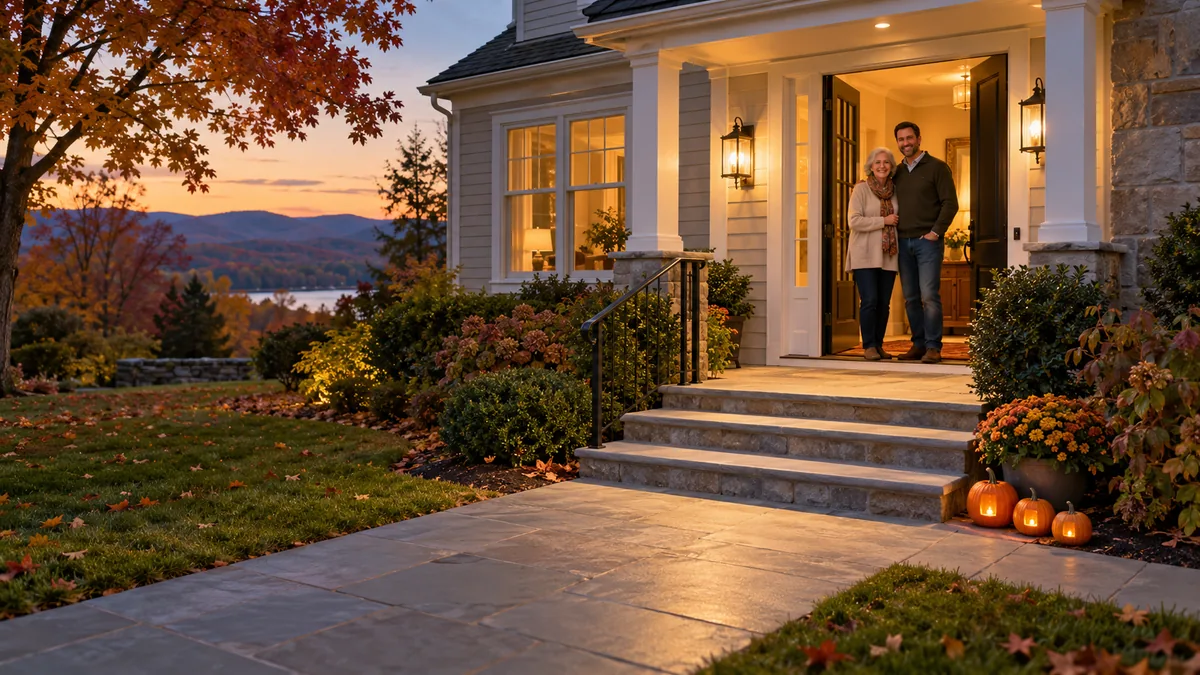
    Older woman and a younger man standing in the open, brightly lit doorway of a home at dusk, with a handrail on the front steps, a clear stone walkway and pumpkins set off to the side

    In short

    Halloween changes a home for a few hours: decorations narrow walkways, extension cords appear on the porch, candles flicker and strangers come to the door after dark. For an older adult aging in place, the safest plan is simple. Clear and light the path to the door, replace open flames with battery-powered lights, decide in advance who answers the door, and keep the celebration at a pace that matches the person's energy and mobility.

    Why a Halloween home check matters

    Falls are the reason. More than one in four older adults falls each year1, and in 2024 falls among adults 65 and older caused over 43,000 deaths and about 4.5 million emergency department visits2. The CDC and the National Institute on Aging both point to lighting, clutter and tripping hazards as things families can fix at home34. Halloween adds new hazards to a familiar home for one night, which makes it a useful reminder to look at that home with fresh eyes. The hazards that matter are rarely dramatic: a cord, a loose mat, a dim step.

    1. Start at the sidewalk and front steps

    Before sunset, walk from the street or driveway to the front door. Remove fallen branches, wet leaves that hide uneven ground, loose mats and decorations that narrow the path. Check that handrails are secure, ideally on both sides of the steps4. Make step edges easy to see; marking them with brightly colored tape helps5. Never place pumpkins where a visitor or resident has to step around them.

    2. Keep lighting steady and useful

    Decorative lighting should never replace the light someone needs to see steps, thresholds and changes in surface. As people age, they need brighter light to see well3. Keep the porch, front hall and the route to the bathroom well lit, and turn the porch light on at night4. Avoid strobe and flicker effects near steps. If the person has vision changes, ask whether the setup actually helps them see.

    3. Swap open flames for battery-powered light

    Decorations are a real fire risk. According to the National Fire Protection Association, between 2019 and 2023 an annual average of 832 home structure fires began with decorations, and one-third of those incidents started with candles6. NFPA advises using only battery-operated candles or glow sticks in jack-o'-lanterns6. Keep decorations away from heaters, lamps and other heat sources, and away from exits.

    4. Keep cords and clutter out of walking routes

    Keep cords near walls and away from walking paths4, and avoid running them across doorways. Remove unstable displays, trailing fabric and small objects from the floor. Indoors, keep an easy route from the favorite chair to the bathroom, kitchen and bedroom, and remove anything that could be tripped over from stairs and walkways3. Our guide to reducing fall risk in seniors covers each room in more detail.

    5. Decide who answers the door

    An older adult should never feel obligated to stand up repeatedly, hurry to the door or carry a heavy bowl. Standing up quickly can cause a drop in blood pressure that leads to dizziness or lightheadedness; encourage the person to take their time getting up from a chair, and not to walk if they feel dizzy7. A family member, neighbor or Care Professional can manage visitors. If the person enjoys greeting children, set up a stable chair near a clear, well-lit entry and let them choose when to stop.

    6. Choose a celebration that matches energy and mobility

    Some people love an active neighborhood evening. Others prefer watching costumes from the window, sharing treats with grandchildren or settling in for a seasonal movie. Consider fatigue, balance, hearing, vision and personal preference, and make participation optional rather than assuming every older adult wants the same experience. Choose well-fitting, supportive shoes3 rather than costume footwear or slippers.

    7. Think about food, pets and unexpected visitors

    Keep treats in clearly labeled containers and follow the person's usual dietary or swallowing recommendations. Keep pets away from a frequently opening door, where they may bolt or become a tripping hazard. Never let the excitement of the evening override normal home security habits: use the peephole or video doorbell, and remember that residents can always choose not to answer an unexpected knock.

    8. Make a quick family communication plan

    Agree on who will be home, when visitors are expected, how everyone can reach one another and what happens if the older adult feels tired or unwell. Keep a charged phone within reach of their chair. If the person lives with Dementia or Parkinson's disease, plan around their individual needs rather than a one-size-fits-all checklist; our guides to Halloween with Parkinson's and Halloween and Dementia go deeper.

    The 10-minute Halloween home safety checklist

    • Walk the outside path before dark; clear leaves, branches and clutter.
    • Secure or remove loose mats.
    • Check that handrails are solid and step edges are visible.
    • Test porch, step and hallway lights.
    • Move cords to the walls and away from doorways.
    • Replace open flames with battery-operated candles.
    • Keep decorations away from heat sources and exits.
    • Set up a stable chair and a candy station at an easy height.
    • Decide who will answer the door, and keep pets away from it.
    • Put a charged phone within reach.

    The takeaway

    Aging in place means continuing to take part in the moments that make a home meaningful. Ten minutes of preparation keeps Halloween welcoming while protecting comfort, independence and choice.

    Support for aging in place

    Angels on Call Homecare has supported families caring for loved ones at home since 2005. Our Care Professionals pair practical home-safety awareness with companionship and specialized support for Dementia and Parkinson's disease, so families can protect both independence and safety.

    Continue the Halloween series

    Further reading

    This article is for general education and does not replace individualized advice from a physician or other clinician who knows the person. If you notice sudden changes in health, behavior or mobility, contact a healthcare professional promptly.

    Sources

    FAQ Schema Indexed

    Frequently asked questions

    Should older adults avoid handing out candy on Halloween?+

    No. Many older adults enjoy it and can take part comfortably. The key is avoiding unnecessary rushing, repeated standing and carrying, and matching the activity to the person's abilities.

    Are real candles safe in Halloween decorations?+

    Battery-operated candles are the safer choice. The National Fire Protection Association reports that about one-third of home decoration fires start with candles and recommends battery-operated candles or glow sticks in jack-o'-lanterns.

    Which Halloween decorations are safest around walkers and canes?+

    Choose stable, low-clutter displays that do not narrow walkways or interfere with walkers, canes, handrails or visibility. Keep cords along walls and decorations off the walking path entirely.

    Should an older adult living alone answer the door on Halloween?+

    Only if they want to and it feels safe. They can greet visitors from a seated spot near a well-lit door, ask a neighbor or family member to help, or turn off the porch light to signal that they are not participating.

    Is extra porch lighting enough to prevent falls?+

    Lighting helps, but it is only one part. Clear paths, secure handrails, supportive shoes, standing up slowly and an individualized fall-risk assessment from a clinician all matter.

    #halloween#home-safety#fall-prevention
    Share
    Eric J. Dalton, Vice President, Angels on Call Homecare

    About the Author

    Eric J. Dalton

    VP of Operations and Visionary, Angels on Call Homecare

    CDES · CDCP · Dementia Care Specialist · Montessori Dementia Capable Certification · Teepa Snow Inspired Certification · CPDC · Parkinson's Foundation Site Champion · Aging in Place Essentials Professional

    Dementia and Parkinson's care strategist, systems thinker, and advocate for dignity-centered aging at home. Through Aging in Place Redefined and leadership at Angels on Call Homecare, his work focuses on redefining advanced, emotionally intelligent, clinically guided care at home for families navigating cognitive and neurological conditions.

    Written and reviewed by Eric J. Dalton. Last reviewed Oct 29, 2026. See full credentials
    Specialized Care at Home

    Looking for specialized Dementia or Parkinson's care at home?

    Angels on Call Homecare delivers clinically supervised, specialized in-home care designed around the person, not the schedule of a facility.