In short
For a person living with Alzheimer's or another Dementia, Halloween can make a familiar home feel unfamiliar: repeated doorbells, masked faces, flashing lights and a busy door after dark. Keep the parts the person genuinely enjoys, move the celebration earlier in the day, quiet the front door, ask visitors to remove masks before greeting, choose steady lighting over startling effects, and keep a close eye on the door, because most people living with Dementia will wander at least once.
A holiday that changes the home
A doorbell rings again. A neighbor arrives wearing a mask. The living room looks different under flashing lights. Traditions that once felt playful can become confusing for someone living with Dementia. An estimated 7.4 million Americans age 65 and older are living with Alzheimer's in 2026, and nearly 13 million Americans provide unpaid care for a family member or friend with Dementia1. For many of those families, the holiday calls for a plan.
That plan rarely means canceling Halloween. It means deciding in advance which parts still bring comfort, and which parts now create stress no one needs.
Start with the person, not the decorations
Dementia affects people differently. Some people enjoy the excitement; others are unsettled by unfamiliar faces, sudden sounds or a rearranged room. Begin with a simple question: what does this person usually enjoy about Halloween? Familiar music, an autumn dessert, a photograph from years past or a quiet visit with grandchildren may mean more than a crowded event. The Alzheimer's Association encourages families to set realistic holiday expectations2.
Make the front door predictable
Repeated doorbell rings interrupt conversation, rest and the evening routine. Consider these options:
- Turn down or disable the chime for the evening and ask a family member to greet trick-or-treaters on the porch.
- If the person wants to take part, offer a seat with a view of the door so they can enjoy the costumes without being responsible for every visitor.
- If the evening would be too much this year, turn off the porch light and post a friendly "No treats tonight, happy Halloween!" note. Opting out is a legitimate choice.
Help visitors feel familiar
Ask relatives and friends to remove masks before greeting your loved one. Approach from the front and introduce yourself3. Speak clearly, allow time for a response and avoid quizzing the person about names or dates. Let the conversation move at their pace.
Watch the door: Halloween and wandering
Halloween has a risk that is easy to overlook. Six in 10 people living with Dementia will wander at least once, and many do so repeatedly4. On Halloween the front door may open dozens of times after dark, with excitement outside and familiar faces distracted inside.
- Assign one adult to keep track of the door and of your loved one for the whole evening. Some families arrange for a Care Professional to stay with their loved one during the busiest hours.
- Consider warning bells above doors or a monitoring device that signals when a door opens4.
- Know the time of day the person is most likely to wander; for people who experience sundowning, that can be early evening4.
- Consider enrolling the person in a wandering response service4, such as MedicAlert's Safe & Found program, which is available 24/7 to assist with wandering emergencies5. Keep a recent photograph ready just in case.
- If your loved one goes missing, search the immediate area right away. If they are not found within 15 minutes, call 911 and tell the responders that the person has Dementia4.
For a deeper look, read our guide to wandering in Dementia.
Choose decorations that keep the home recognizable
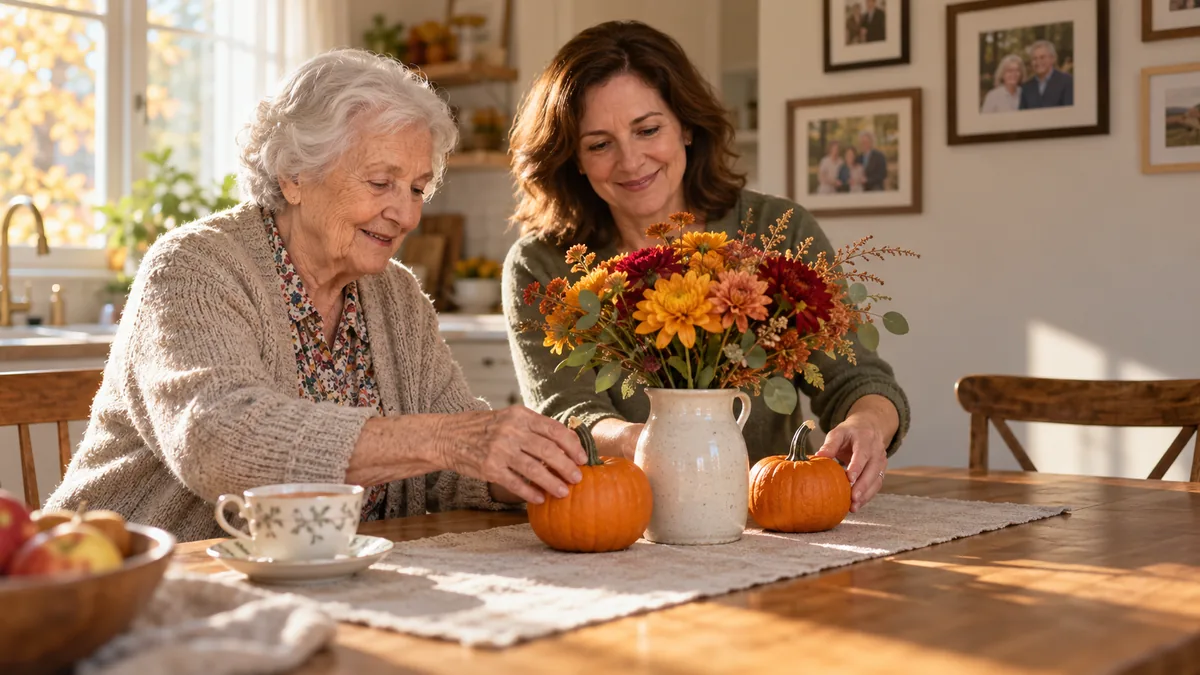
A familiar room can feel unfamiliar when it fills with moving figures, flashing lights, sound effects or dark coverings. The Alzheimer's Association notes that blinking lights may be confusing and advises against decorations that look like food, such as artificial fruit or candy2. Try a few pumpkins, soft steady lighting and seasonal colors instead, and keep pathways and recognizable landmarks visible. If there are steps, the National Institute on Aging suggests marking the edges with brightly colored tape so they are easier to see6.
Keep real candy separate from decorations
Avoid displays that look edible but are not. Keep real treats clearly identified and follow any existing dietary or swallowing guidance. A decorative bowl is never worth uncertainty about what is safe to eat.
Protect the evening: sundowning and the clock change
Sundowning is increased confusion that people living with Alzheimer's and Dementia may experience from dusk through night7. Halloween's busiest hours fall in exactly that window. Rather than waiting for peak trick-or-treating, consider a daytime pumpkin activity, an early visit or a brief celebration before dinner; the Alzheimer's Association suggests celebrating earlier in the day when evenings are difficult2. Keep the home well lit in the evening and reduce stimulation during the evening hours7.
Halloween also arrives within days of the end of daylight saving time. In 2026, the clocks fall back at 2 a.m. on Sunday, November 1, the night of Halloween. In the week that follows, darkness comes an hour earlier by the clock. Turn lights on before dusk rather than after, keep evening routines steady, and spend time in daylight during the day when possible7. Our explainer on what sundowning is and how to respond goes further.
Respond to distress with curiosity, not correction
If your loved one becomes uneasy, ask what changed. Was the room suddenly louder, with many conversations at once? Did a mask appear unexpectedly? Is the person tired, uncomfortable, hungry or in need of the bathroom? A noisy or stressful environment is a common trigger for distress8. Lower the stimulation, offer reassurance and move to a familiar activity in a quieter room. Avoid arguing about whether a decoration is real8, and never insist that the person should be enjoying the event.
What to say in the moment
Short, calm phrases work better than explanations:
- "That surprised me too. Let's sit in the kitchen for a bit."
- "You're safe. I'm right here with you."
- "Those are the neighbors' children dressed up for Halloween."
- "It's getting busy. Would you like some tea?"
If confusion or behavior changes suddenly or significantly, contact a healthcare professional promptly. Sudden or rapidly changing behavior, especially after an infection, should be brought to a doctor's attention because it may have a medical cause89.
Preserve the memory of the tradition
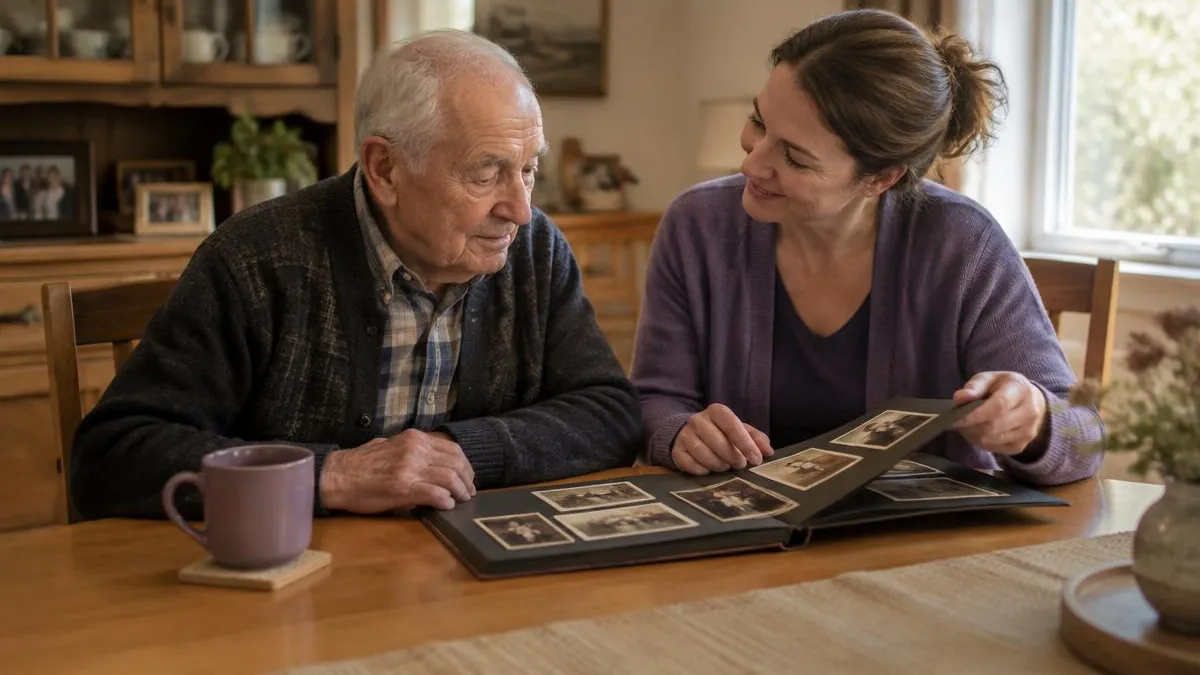
Invite the person to sort autumn photographs, choose a favorite song, place one decoration or tell a story about Halloween years ago. Do not require them to remember specific names or dates. The purpose is shared enjoyment in the present.
A family Halloween plan
- Choose one familiar activity, ideally earlier in the day.
- Prepare visitors: masks off, approach from the front, introduce themselves.
- Use steady lighting; turn lights on before dusk.
- Keep doors and walking paths clear, and mark step edges.
- Assign one adult to the door and one to your loved one.
- Plan a quiet room to retreat to.
- Have a wandering plan, a recent photo and the 15-minute rule ready.
- Be willing to end the celebration early, or to skip the doorbell altogether.
The takeaway
The best Halloween plan protects dignity, recognizes changing needs, keeps the door watched and leaves room for connection. Simple, familiar and early usually wins.
Specialized Dementia care at home
At Angels on Call Homecare, Dementia care starts with who the person has been and who they remain. Our Care Professionals receive specialized Dementia-care education and build each day around personal history, familiar routines and meaningful engagement, which is what holidays put to the test.
Continue the Halloween series
Further reading
This article is for general education and does not replace individualized advice from a physician or other clinician who knows the person. If you notice sudden changes in health, behavior or mobility, contact a healthcare professional promptly.